

You build a better sushi kitchen when you center the station around storage, prep, and service, then keep knives, mats, rice tools, and cold ingredients within arm’s reach. Separate raw, ready, and hot zones, use point-of-use refrigeration for delicate items, and choose all-electric equipment to cut noise. Clear traffic lanes and clean surfaces help you work faster, stay sanitary, and keep service calm. With a smart layout, every motion starts to feel a little easier.
Key Takeaways
- Center the sushi station around a tight storage-prep-service triangle to shorten movement and speed prep-to-plate flow.
- Keep knives, mats, rice tools, condiments, and tweezers within arm’s reach for precise, efficient micro-movements.
- Use point-of-use refrigeration drawers for delicate fish and roe to protect cold chain and reduce temperature swings.
- Separate raw-fish prep from ready-to-plate areas with clean, non-porous surfaces to support hygiene and lower cross-contamination.
- Choose quiet, all-electric equipment and open traffic lanes to maintain calm service during peak orders.
What Makes a Sushi Kitchen Layout Work?
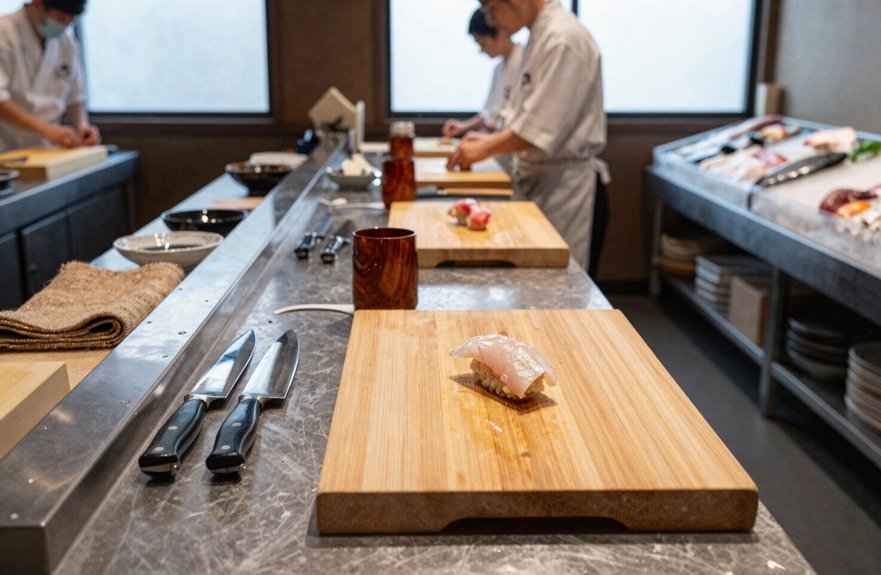
A sushi kitchen layout works best when every step feels close, clear, and calm, because speed and cleanliness matter just as much as skill. You get better flow when the sushi station sits at the center, so cold ingredients move fast from storage to rolling without extra steps.
Build your golden triangle around storage, prep, and service, and keep point-of-use drawers, mats, knives, and rice tools within easy reach.
Smart knife sharpening habits keep your edge ready, while sanitizer placement planning helps you clean fast without breaking rhythm.
Use dedicated cold storage for delicate items like tobiko, and keep pathways open so you move freely, not like you’re dodging furniture in a tight apartment.
That freedom keeps service smooth, precise, and safe.
Sushi Layout Zones That Keep Traffic Moving
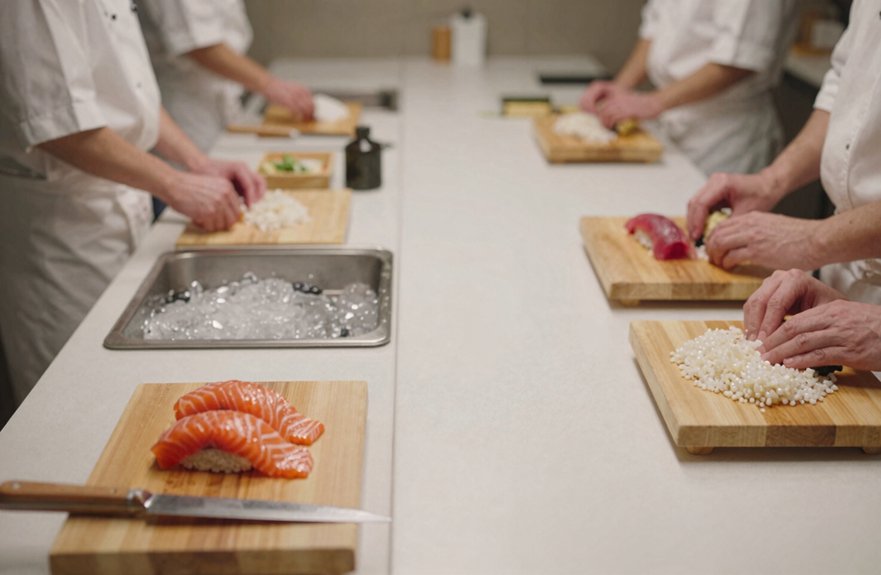
You can keep traffic moving by building a clear prep-to-plate flow, with a centralized sushi station that lets you reach cold storage, rice prep, and plating without crossing busy paths.
Set up clean, open traffic lanes, so your team can move from storage to prep to service without bumping into noodle or fry work, even when orders stack up.
When tools, condiments, and key ingredients stay close at hand, you cut extra steps, protect freshness, and keep the whole line calm and steady.
Prep-to-Plate Flow
When you design a sushi station around a clear prep-to-plate flow, every move feels smoother, faster, and more natural. You guide fish and rice in one direction, from refrigeration to cutting, then to plating, so you don’t waste steps during a rush.
Use the Golden Triangle as your map, keeping storage, prep, and service connected, while leaving dish-walk paths open so traffic stays calm and quiet.
Place point-of-use cold drawers at the counter for sensitive items like roe, and keep tools, garnishes, and towels within arm’s reach.
Noise reduction strategies improve when staff don’t crisscross, and Ventilation positioning helps keep the work area comfortable.
Separate raw fish prep from ready-to-plate items, and you’ll protect hygiene without slowing down.
Centralized Sushi Station
By centering the sushi station, you give rice, raw fish, and tools a direct path between prep and refrigeration, which helps your team move faster during rushes and keeps wait times from creeping up. You also protect your freedom to work cleanly, because each sushi layout zone stays focused on one job, from cold storage to plating.
- Keep knives and key ingredients within arm’s reach.
- Use Knife Skills for Speedy Cuts without extra steps.
- Hold Portion Control steady for Consistent Sizing.
- Place refrigeration drawers beside the assembly point.
- Arrange tables and the serving edge for a straight, quiet flow.
This setup cuts micro-search time, limits cross-traffic, and helps delicate items stay fresh.
Clear Traffic Paths
A centered sushi station works even better when the kitchen around it keeps traffic moving in one clear direction, so every step feels calm instead of crowded. You can map zones for receiving, cold storage, rice prep, raw fish, rolling, and plating, then label them so your team flows forward, not sideways.
| Zone | Move | Benefit |
|---|---|---|
| Prep | One way | No cross-traffic |
| Roll | Direct supply | Less backtracking |
| Plate | Short return | Faster service |
Keep tables parallel to main lanes, and leave wide paths for carts and clean sightlines. Place refrigerated drawers and rice at the assembly lane, so you cut wasteful steps. Separate raw-fish handling from ready-to-serve work, and build a quick route from the counter back to tools. Your Staff workflow mapping and Sanitation checklist stay simple, and freedom in service feels natural.
Why Precision Matters in Sushi Prep
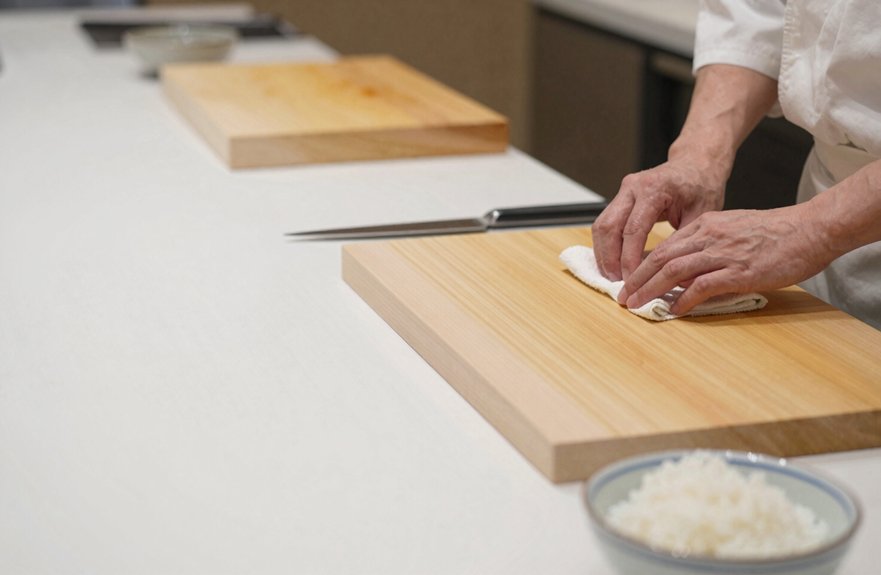
Precision shapes every part of sushi prep, because even small mistakes can change taste, texture, and safety in a hurry. You keep control by building habits that support freedom, speed, and calm focus.
- Knife consistency keeps cuts clean and even.
- Rice timing helps you hit the right texture.
- Hygiene audits stay easier when tools live in grab zones.
- Workflow noise drops when paths stay clear and simple.
- Precise portions protect crunch, balance, and trust.
When you move less and reach less, you cut contamination risk and stay sharp during busy service. You can plate each roll with steady hands, repeat the same high standard, and enjoy a smoother shift.
That kind of precision doesn’t cage you, it gives you room to work with confidence and flow.
Why Point-of-Use Refrigeration Matters
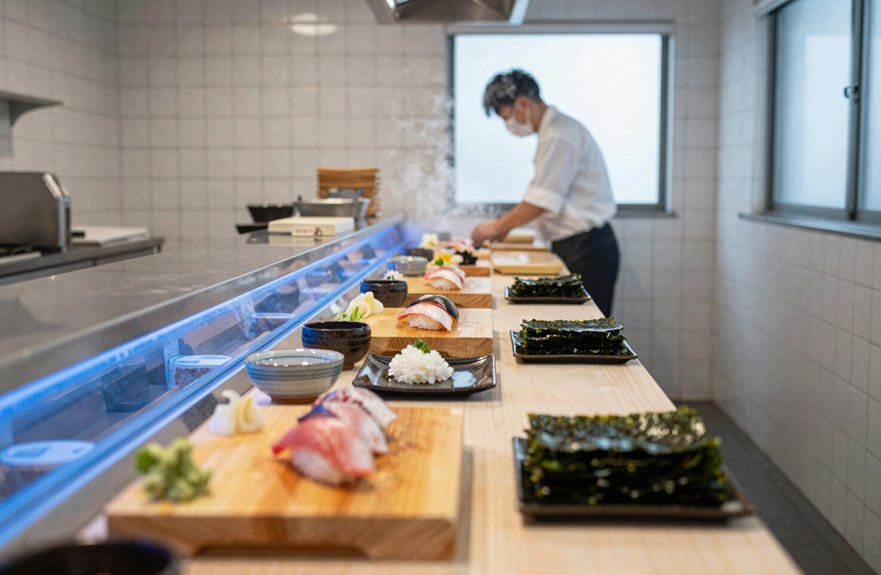
When sushi ingredients stay cold right at the prep line, you protect both quality and speed, because staff don’t have to keep running back and forth to a walk-in cooler.
You keep delicate items, like roe, in stable drawers, so their texture stays crisp and your sushi rice timing stays on track.
With point-of-use refrigeration, you cut temperature swings, limit exposure during staging, and lower cross-contamination risk, which makes your hygiene audit checklist easier to pass.
You also help your team move faster during busy service, since the right ingredients are already within reach and ready to assemble.
For high-sensitivity items, dedicated cold storage keeps them safer and more consistent, so you can serve with confidence and work with more freedom, not more hassle.
How All-Electric Equipment Lowers Kitchen Noise
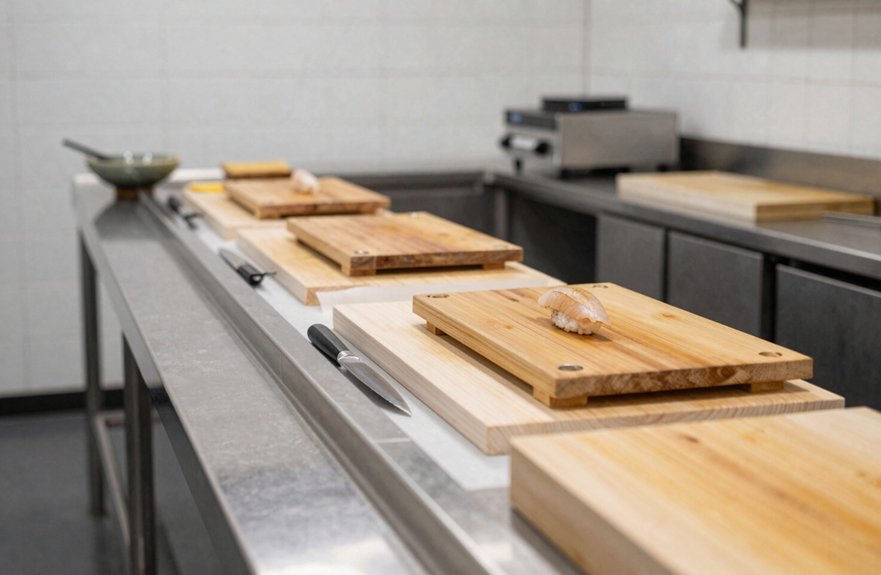
By switching to all-electric equipment, you can make a sushi kitchen noticeably quieter, because induction cooktops don’t add the ignition and combustion noise that gas burners do. That’s one of the smartest noise reduction strategies when you want a calm, free-flowing workspace.
With fast, controllable heat, you’re not constantly tweaking flames, so you cut down on extra chatter and movement.
Induction cooktop benefits also include less fan and hood load, which can lower the steady hum overhead.
Modern closed-loop stations stay cleaner, so you spend less time scraping residue and hearing loud reset work.
In LEED-style, no-open-flame kitchens, you keep the room focused and peaceful.
- Quieter peak service
- Faster temperature recovery
- Less HVAC noise
- Easier cleanup
- Better compliance
Keep Sushi Tools Within Easy Reach
Keep your knife roll, tweezers, nori scissors, and rice scoops within easy arm’s reach at the sushi station, so you can work fast without stopping to hunt for tools.
Set up a point-of-use layout with stable refrigeration drawers and neatly zoned trays beside you, so toppings, sauces, and raw or ready-to-use items stay close, clean, and easy to grab.
When you place tongs, blades, cutting boards, and garnishes in a steady sequence, you cut down on extra movement, keep the line quieter, and make each roll feel smoother to finish.
Tool Reach Zones
Set up a tool reach zone so your most-used sushi tools sit within arm’s length, about 24 to 30 inches from the cutting surface, letting you grab the sashimi knife, soy or sushi tongs, microfiber cloths, and rice paddle without stepping away or twisting your body.
Keep Knife Handling steady by placing the knife, bamboo mat, portion scraper, and glove station on the same side, so your motions stay smooth and free.
- Use point-of-use holders for quick grabs.
- Keep Towel Segregation clear with a separate wiping caddy.
- Add sliding rails or under-counter drawers for fast reloads.
- Place cold drawers nearby to cut extra steps.
- Maintain clean-to-raw separation, so your workspace stays open, calm, and ready for action.
Station-Side Essentials
When every second counts, your sushi station works best when the tools you use most often stay right beside the prep counter, where you can reach them without breaking your flow.
Mount a tool rail or drawer for your nigiri paddle, shamoji, yanagiba, and tweezers, so each motion stays smooth and repeatable.
Add point-of-use refrigeration drawers, and you’ll protect delicate fish from temperature swings while keeping your pace steady.
Place makisu mats, soy dish areas, and portion scoops where your hands can switch between rice and fish without crossing paths.
Keep towel and wipe dispensers at the station for quick cleanups.
A compact tool zone with labeled wells boosts staffing efficiency, supports noise reduction, and keeps your workflow pacing calm, clean, and free.
How to Separate Raw Seafood From Rice Work?
To protect both quality and safety, you should separate raw seafood from rice work with a clear, physical divide in the kitchen, because sushi depends on clean control at every step.
Put a raw seafood only zone on one side, with red boards, its own knives, and strict Knife hygiene rules, while rice stays opposite, behind a barrier, with Hotbox separation from seafood prep.
Keep no shared surfaces, use liners or trays for cutting fish, and switch to dedicated mats for rice.
- Store seafood in tight cold-chain refrigeration.
- Hold rice parts in sealed, labeled storage.
- Mark every tool by zone and batch.
- Wash hands, change gloves, then sanitize tools.
- Pause for a cleaning interval when you cross zones.
How to Speed Up Sushi Orders at Peak Hours
How do you keep sushi orders moving fast during the rush? Center your station so rice, toppings, and rolling tools sit in a tight Golden Triangle, and you’ll cut wasted steps right away.
Use point-of-use refrigeration drawers for tobiko, masago, and other delicate items, so you don’t lose time to temperature swings.
Set out pre-portioned proteins and calibrated bowls before service starts, then batch menu items and pace tickets so you can flow from one order to the next without stopping.
Keep knives, mats, trays, and bottles within arm’s reach, and make sure your lanes stay open so the team can move cleanly.
With staffing cross training and smart order prioritization, you stay nimble, protect quality, and keep the rush from bossing you around.
Use Modular Stations for Menu Changes
You can keep your sushi kitchen nimble by using flexible prep modules that let you shift rolling, topping, and garnish areas as your menu changes, without turning the whole workspace upside down.
Swap-ready cooking stations make it easy to add or remove tools and cold storage drawers, so new items move in fast and old ones step out just as smoothly.
When you keep service flow reconfigurable and the interfaces consistent, your team stays in rhythm, and the kitchen feels calm even when the menu isn’t.
Flexible Prep Modules
When your menu shifts with the seasons, flexible prep modules keep the sushi line calm, tidy, and ready for change without major remodeling.
You can reframe menu seasonalization with plug-and-play stations, while station calibration keeps each tray, slicer, and guide matched to your ingredients for better ingredient hygiene and less swap downtime.
- Mix rice portioning, cutting, and cold-side assembly in one smart module.
- Keep chilled drawers beside prep surfaces to protect freshness.
- Standardize footprints so new units slide in easily.
- Shift staff roles fast when demand spikes.
- Reuse calibrated tools to protect texture and workflow.
This setup gives you freedom, because you can add rolls, toppings, or portion changes without feeling boxed in.
It’s a practical way to stay nimble, save time, and keep every movement smooth.
Swap-Ready Cooking Stations
Because menu changes can arrive fast, swap-ready cooking stations give your sushi kitchen a simple way to adjust without tearing up the whole line.
You can build plug-and-play bays with induction tops and interchangeable holding modules, so you switch from one seasonal menu item to another with ease.
Standard electrical supply, drainage, and heat-safe surfaces cut downtime during a launch or a limited-time promo, and you keep your team moving freely.
Add removable steam lids, calibrated warmers, and precise griddles to hold rice, toppings, and glaze bases in tight ranges.
When you plan temperature profiling with modular sizing, you keep heat even and results steady.
Place each station within arm’s reach of prep, and you’ll reconfigure fast, without feeling boxed in.
Reconfigurable Service Flow
A sushi kitchen runs best when the service flow can shift as quickly as the menu does, so modular stations should let you rework the prep, cold-chain, and assembly path without major structural changes.
With plug-and-play modules, you can move from classic rolls to seasonal specials fast, and still keep output steady.
- Swap induction units for hot sides.
- Keep standardized surfaces for easy resets.
- Place tools within arm’s reach.
- Build in matching fridge drawers for hygiene.
- Plan waste stream planning and cross contamination control early.
You’ll keep the same smooth micro-movements, even when stations change places, which helps your team stay calm and free to focus.
That flexibility also lets you add tempura or broth items without breaking the sushi line.
Save Space With Vertical Sushi Storage
Vertical sushi storage can free up valuable counter space while keeping your ingredients close at hand, which matters a lot in a busy prep area. You can Enhance Vertical Efficiency with tiered drawers and shelving that fit rice, nori, and pre-portioned fish into a smaller footprint, while still protecting freshness.
Place multi-level storage beside your prep counter so you can Reduce Retrieval Time and keep movement calm during rushes. Add labeled refrigeration drawers for delicate items like roe, since steady temperatures help texture stay right at service.
Organize shelves by category, with dry goods up top and sensitive items below, so you reach what you need fast. Adjustable shelf spacing and slim separators help containers stay put, lids stay closed, and your setup feels tidy, efficient, and ready for action.
Keep Hot Equipment Away From Sushi Prep
You’ll want to keep rice warmers, griddles, and other hot equipment on a separate module or far from your sushi prep area, so heat and steam don’t slip into the cold zone where freshness matters most.
That clear buffer helps protect texture, lowers condensation on hands and tools, and cuts down on cross-contamination, which your knives will appreciate even if they don’t say so.
When you plan the layout with storage, prep, and service in mind, you keep sushi work moving smoothly in the cool path while hot items stay where they belong.
Heat Separation Zones
When you separate heat from sushi prep, you protect both the food and the workflow, because hot equipment like teppanyaki griddles, induction burners, fryers, and hot holding wells can raise nearby temperatures, add steam, and increase the chance of contamination.
- Set heat zones apart.
- Use backsplashes or partitions.
- Guide airflow direction away.
- Keep steam control tight.
- Place cold drawers beside you.
You’ll keep rice, fish, and tools in a calm, clean lane, while hot vapors stay on their own side.
In all-electric kitchens, this split matters even more, since strong induction areas can warm the room fast.
Separate supply paths also help you move freely, avoid cross-contact, and keep service quiet.
That way, you work with more control and less chaos.
Cool Prep Proximity
Keep your sushi prep cool and close at hand by placing refrigerated counters and point-of-use fridges right beside the sushi station, while you push woks, fryers, and other hot equipment to another zone.
You’ll save steps, protect rice temperature control, and keep toro, sashimi-grade fish, and roe within a stable cold chain.
Set hot-side gear on the far end or downwind, so steam, grease, and heat don’t drift toward your cuts and rolls.
Use clear passageways and dedicated work zones, so you can move from chilled prep to plating without crossing the fire line, which supports raw seafood segregation and cuts contamination risk.
This layout also keeps service calmer, since your team won’t dodge hot pans like it’s a kitchen obstacle course.
Improve Knife Work With Better Prep Surfaces
For cleaner cuts and steadier hands, start with prep surfaces that support both food safety and blade control, such as food-grade stainless steel or high-density polyethylene boards with a non-porous finish that wipes down easily between sushi items.
- Set a knife-work zone at counter height, around 36 in, so you cut with less strain.
- Choose a lightly textured, self-draining mat when you need extra grip, not a slippery stage.
- Keep your chef’s knife, yanagiba, deba, tweezers, and towel within arm’s reach, so your motion stays free.
- Use safety color coding and separate raw-fish boards from rice and garnish areas.
- Build sanitize workflow planning into every reset, so you stay clean, calm, and fast.
Keep Ingredients Close to the Service Line
As service picks up, your sushi ingredients should sit close enough that you can reach them without breaking rhythm, because every extra step adds time, heat, and stress.
Put vinegared rice, nori, fresh fish, and masago within arm’s reach of the line, and you’ll move faster without feeling rushed.
Center the station so refrigeration drawers and point-of-use cold storage stay at the prep counter, which helps keep texture crisp and service smooth.
Build zoning along one edge for rice, toppings, assembly, and plating, so you flow from step to step without crossing paths.
Add fixed grab points for tongs, knives, shamoji, soy, and wasabi.
With smart Ingredient batching strategies and Cross training staffing plans, you can keep the line calm, nimble, and free.
How to Reduce Cross-Contamination in Sushi Kitchens?
To reduce cross-contamination in a sushi kitchen, you need a clear raw-to-ready workflow that keeps risky items away from finished ones, and that starts with a dedicated raw prep zone for fish, tobiko, and roe that stays physically separate from your hand-finish and plating area. Keep your freedom by making the line simple, not crowded.
- Use point-of-use refrigerated drawers to hold cold items close.
- Give each tool a color, then keep it there.
- Require full tool changes and sanitation between steps.
- Build food handler training around glove discipline and no-touch habits.
- Check sanitizer verification often, and protect allergen separation every shift.
Store frozen tobiko and masago in dedicated cold storage, and limit time at room temp so quality stays crisp and safe.
Layout Ideas for Small Urban Sushi Restaurants
Small urban sushi kitchens need smart layouts that make every inch work harder, and that starts with placing your sushi rice, nori, vinegared toppings, soy and wasabi tools, and garnish containers within easy reach of the cutting and prep surface.
Build a tight golden triangle from cold storage to prep to service, so you can maximize speed routes and keep traffic out of your work zone.
Add refrigerated drawers under the counter to hold delicate ingredients at steady temps, while compact, modular shelves and stacked bowls help you reduce waste handling.
Keep clear paths, with no equipment blocking movement, so your team can accelerate station reflow during busy shifts.
Separate clean and ready-to-serve surfaces, and you’ll minimize re touch prep without boxing in your freedom.
Turn Your Sushi Layout Into Faster Service
When your sushi layout puts the station close to cold storage and prep tables, your team can move faster with fewer extra steps during busy rushes. You keep freedom in the flow when storage, prep, and plating line up in one clear path, so nobody has to zigzag or wait.
Place rice, nori, ginger, wasabi, and garnishes within arm’s reach, and use point-of-use drawers to protect quality.
- Cut search time
- Speed up batch pickup workflow
- Support staggered order cards, cleanly
- Keep hands moving, not wandering
- Hold steady speed during long tickets
With synchronized staging, you can prep one order while another gets plated, which keeps throughput strong and the kitchen calm. That means quicker service, less stress, and a smoother shift for everyone.