

You keep ramen service moving by splitting the kitchen into clear zones for prep, broth, noodles, toppings, and plating, so tickets travel one way and people don’t cross paths. Give each station one owner, keep the pass clean, and leave 90–100 cm for easy movement. Before rushes, run a quick line check, then use short resets when jams build. With a few small layout tweaks, you’ll spot the next fix fast.
Key Takeaways
- Design a one-way layout from prep to broth, noodles, toppings, and plating to reduce crossing and speed handoffs.
- Assign one owner per station so broth, noodle, topping, and plating tasks stay clear during rush periods.
- Stage ingredients by par levels and FIFO labels before service to prevent hunting, guessing, and refill delays.
- Keep the pass area clear, with only active tickets and outgoing bowls, so pickups move fast without clutter.
- Standardize modifier calls with one communication chain to reduce errors and keep ticket changes moving smoothly.
Why Ramen Kitchen Layout Matters
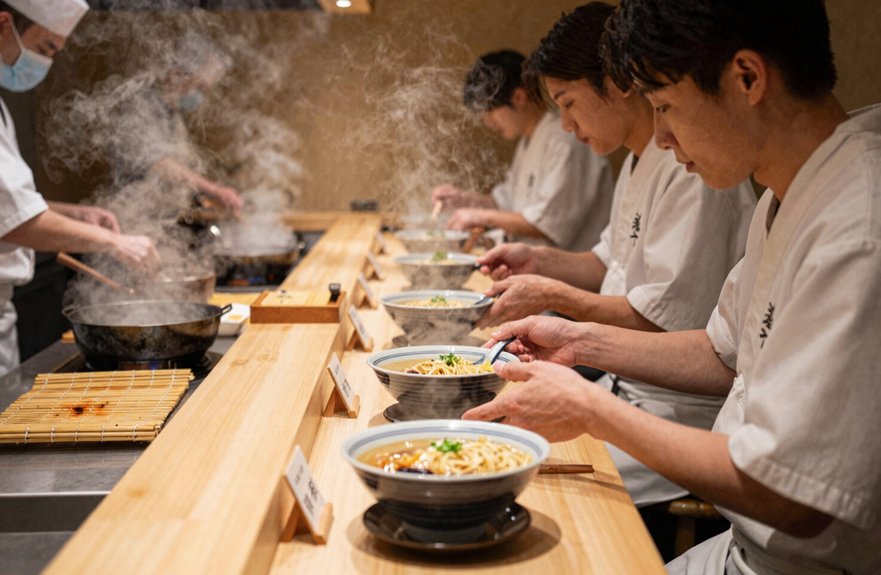
When you design a ramen kitchen, the layout shapes how quickly your team can move from broth to noodles to toppings to plating, and that speed matters most during a busy lunch rush. You want short, repeatable paths that let you move with ease, not friction, so every bowl reaches the guest while it’s hot.
Strong station visibility helps you spot progress at a glance, while clean pass communication keeps the counter calm and clear.
Smart counter placement gives finished bowls a natural landing spot, and tight cross station reach cuts wasted steps without forcing awkward stretches.
When you separate each task into a simple flow, you avoid pileups, reduce rework, and give your crew more freedom to work smoothly, safely, and confidently.
What Rush Hours Reveal About Your Layout
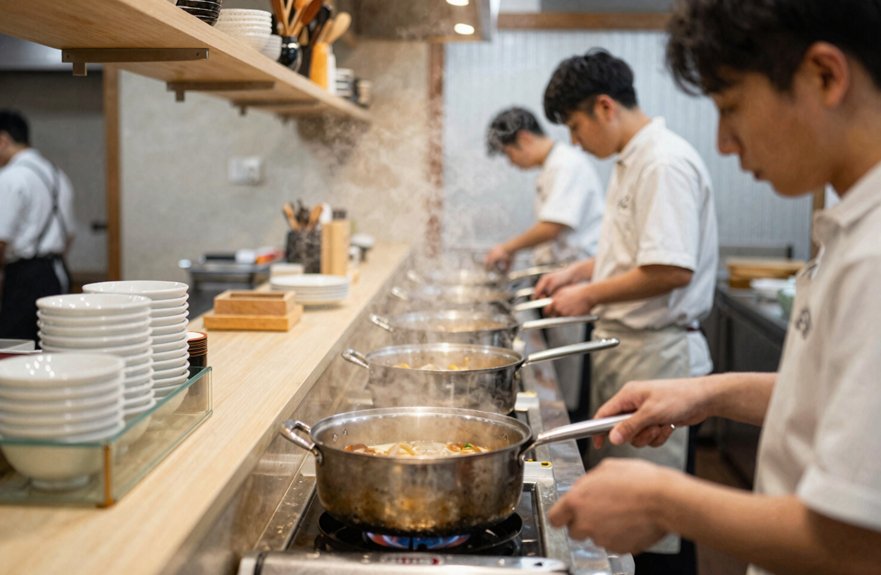
Rush hours act like a stress test for your ramen kitchen, because they show you exactly where the layout breaks down under real pressure, not just during a calm service.
When tickets pile up, you can see the real handoff gaps between broth, noodles, toppings, and plating, and you’ll spot where people keep waiting for tools, approvals, or a clear next step.
That’s where Forecasting throughput helps you shape flow, while operator station mapping shows who owns each zone.
Use queue chokepoints planning to trim cross-kitchen steps and keep clear paths near 90 to 100 cm.
Then keep feedback loop tuning simple: watch where staff search, rework, or pause, and move high-use items closer.
A smart layout gives you more freedom and less friction, every shift.
Why Small Ramen Kitchens Hit Bottlenecks
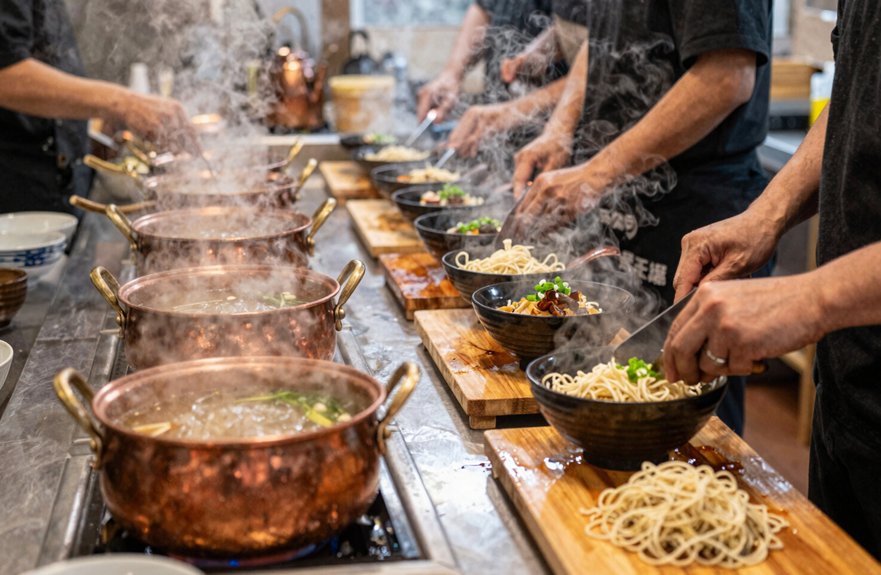
Small ramen kitchens hit bottlenecks fast because every square foot has to do more than one job at the same time, and that pressure builds quickly during busy service.
You’re juggling broth, noodles, toppings, and plating in a tiny space, so one slow handoff can stall the whole line.
When counter space is tight, you walk more, reach more, and lose seconds to every grab for a pan, ladle, or garnish.
A single shared station can become the choke point, and unclear ownership only adds searching, rework, and awkward “who’s got this?” moments.
Strong menu printing speed, clean ticket pacing, cross train flexibility, and staff micro station rotation help you keep each step moving, so peak hours feel less like a jam and more like flow.
Map Your Ramen Workflow Zones
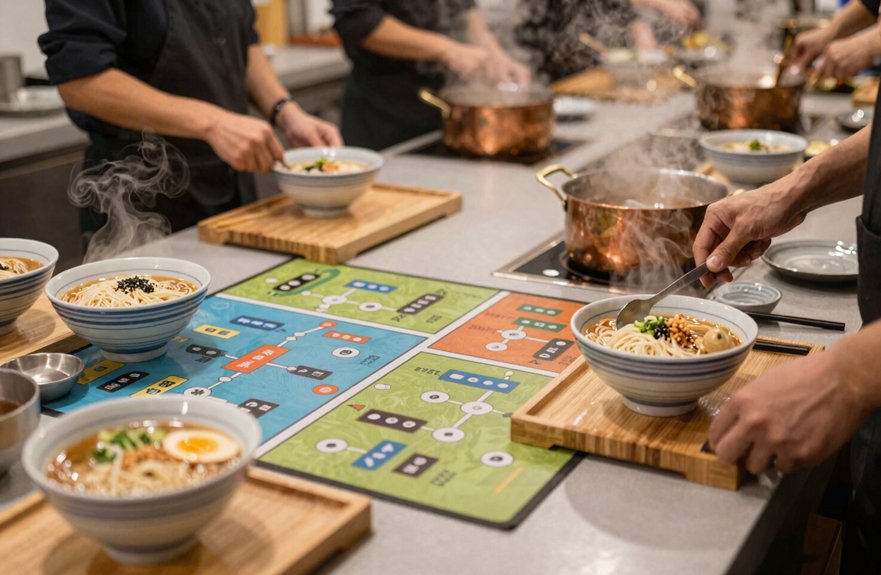
You can map your ramen kitchen into clear prep, cook, and plate zones, so each ticket moves forward with less crossing and fewer mix-ups. Keep your most-used tools close at hand inside each zone, and draw firm borders between areas, because that helps your team stay focused when the rush hits.
When you set up a clean flow from prep to cook to plate, you’ll spot weak spots faster and keep one crowded tool from slowing down the whole line.
Prep, Cook, Plate
When your ramen line has a clear path, each ticket can move from Prep to Cook to Plate/Pack without getting tangled up in the rush. You can build freedom into your shop by keeping those zones simple and focused.
In Prep, use a Batch seasoning flow and a Topping label system so your team grabs the right parts fast.
- Keep tools and toppings within easy reach, not across the room.
- Let Cook stay close to Plate so broth and noodles move fast.
- Store only the next step at each station to cut clutter.
- Use a clear handoff call, so modifiers don’t vanish.
That setup helps you stay calm, move smoothly, and serve every bowl with less stress and more control.
Zone Borders And Flow
Map your ramen kitchen into clear zones, and the whole line starts to feel easier to manage, even during a busy lunch rush.
You can set prep, broth, noodle cooking, assembly, and packaging as separate lanes, then mark each border so work flows forward, not sideways.
Keep storage near prep, cooking close to plating, and dishwashing out of the way, so no one has to backtrack.
When you sync borders with the ticket path, order to handoff, bottlenecks show up fast, right where they belong.
Leave 90 to 100 cm paths for two people, and use plate labeling plus consistency training to keep the pace clean.
At each border, assign the modifier handoff, confirm “ready,” and protect pass speed without chaos.
Set Up Prep, Cook, and Plating
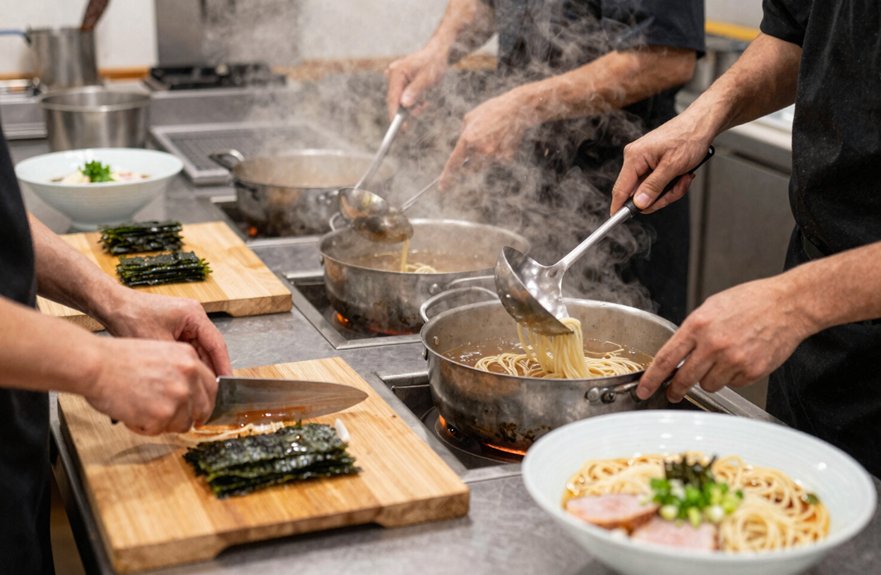
Set up your prep, cook, and plating areas as fixed zones so each ramen ticket moves through the same clean order every time: ingredient prep, broth and tare work, noodle and topping finishing, then plating.
That station setup helps you keep throughput pacing steady, because every move has a purpose.
Keep ingredient stocking tight, with ladles, scoops, towels, and garnish tools right where you use them, so you stay free from little delays that steal momentum.
Batch prep noodles and toppings in set intervals, and let broth lead the cook flow, then noodles, then toppings, for smoother handoff.
In plating, keep the surface clear and ready, so you cut clutter, protect freedom of movement, and support error reduction when orders stack up.
- Fast reach, fewer pauses
- Smooth ticket rhythm
- Cleaner bowl assembly
- Less rework, more calm
Cut Travel Between Every Station
A tight ramen line works best when each step flows forward in a clear path, from prep to broth, then noodle cooking, toppings, and plating or packaging, so you don’t waste time walking back and forth during a busy rush. Keep your highest-use pans and tools at arm’s length, and park rare items off to the side. That way, your hands stay free and your pace stays calm.
| Zone | Move | Feeling |
|---|---|---|
| Prep | Forward | Control |
| Cook | One step | Ease |
| Plate | Finish | Relief |
Set storage near prep, cooking near plating, and washing apart, so you never cross hot and cold work. With Menu engineering and Kitchen staffing, you can batch prep, lock staging points, and protect freedom on the line.
Use a One-Ticket Flow
You keep each order on one ticket from intake to handoff, so every station works on that one path instead of rechecking or repeating decisions. This ticket-by-ticket flow gives you clear ownership, steady handoffs, and fewer mix-ups when orders come in from different apps. When you follow one order, one path, your kitchen stays calm, fast, and much easier to manage.
Ticket-By-Ticket Execution
During a busy ramen rush, the fastest way to spot hidden delays is to follow one ticket from the moment it’s placed all the way through prep, cooking, plating or packaging, and the expo call.
With peak rush observations, you can catch timer based slowdowns where minutes hide between steps, not inside them.
Keep ticket handoff clarity tight by assigning one station owner per output, so the order doesn’t wander.
Use station callouts discipline: expo calls, you repeat the modifier, then you call firing, working, and pickup ready.
Batch noodles or toppings upstream, but don’t break the ticket’s forward flow for tiny side jobs.
Keep the pass clear for ready food only, because clutter steals your freedom and turns speed into waiting.
- Track each pause
- Speak every detail
- Move one way
- Keep the pass open
One Order, One Path
When a ramen rush starts to pile up, a one-ticket flow keeps the whole line calm, because one printed or screen ticket should move through a clear path from prep to cook, then toppings, plating or packaging, and finally expo. You keep freedom in motion by avoiding side channels and duplicate touches.
| Stage | You do | Benefit |
|---|---|---|
| Prep | Own one change channel | Fewer mix-ups |
| Cook | Repeat only your modifier | Cleaner handoff |
| Expo | Call, then pickup timing | Faster flow |
You call and respond on the same path: expo names the order, the station says it’s firing, then you call pickup. If errors spike, treat them as one-path communication failures. Tighten the flow with fail fast fixes, not extra rules.
Assign Clear Station Ownership
Clear station ownership keeps a ramen line calm and fast, because each person knows exactly what they’re responsible for and no ticket has to bounce around during a rush. You assign one owner to broth, noodles, toppings, or plating, then keep the path simple: order to expo call, station repeats the modifier, station works, expo picks up.
- Use Standardized station scripts so every call sounds the same.
- Track Ready call pacing metrics so pickup stays honest, not rushed.
- Name one shift contact for questions, so you stay free from constant interruptions.
- Reset roles mid-rush if layout drift starts causing confusion.
When you hold station ownership steady from pre-shift to close, you cut rework, protect flow, and give your team room to move with confidence.
Keep Broth, Noodles, and Toppings Ready
To keep the line moving, make broth, noodles, and toppings stay in steady motion before the rush starts, not as last-minute fixes between tickets.
You can batch cook, portion, and stage each item in separate zones, so nobody has to hunt or guess when orders stack up.
Use FIFO labeling systems and clear par levels, then keep broth hot, noodles portioned, and toppings set in the order you plate them.
During quiet breaks, follow timer based refresh cycles to top everything back up before it runs low.
That way, you avoid cool-down and reheat delays, and you protect the pace your guests feel.
With a simple rhythm, your crew works freer, faster, and with less stress, which feels pretty great when the rush hits.
Design a Faster Ramen Plating Station
As the tickets start stacking up, your ramen plating station should work like a small, dedicated order assembly zone, with only the tools and items you need within easy reach so the counter doesn’t turn into a traffic jam.
Set your flow in one clean line: bowl set, noodles and broth, toppings and garnish, then a final check.
Keep ladles, tongs, garnish spoons, and pre-portioned toppings at arm’s length, while rare tools stay to the side.
Leave 90–100 cm of clear space so two people can move without bumping elbows or slowing the vibe.
Build in takeout packaging at the station, too, so you can plate, label, and pack in one smooth motion.
That supports waste reduction, station sanitation, pass throughput, and tighter reorder pacing.
- Fewer reaches
- Faster checks
- Cleaner counters
- More freedom
Protect the Ramen Pass During Rush
You keep the ramen pass clear by treating it as working space, not storage, so only plated bowls, garnish tools, and outgoing orders stay there. You also control cross-traffic by giving one person ownership of pass-ready calls, which keeps pickups moving and stops folks from wandering in to search, restock, or double-check orders.
When you set simple rules for what belongs on the pass, then clean and restock in quick mini-resets, you cut clutter, protect safety, and keep rush service flowing.
Keep The Pass Clear
When lunch rush hits, the ramen pass should stay a true no-storage zone, because every extra tray, garnish bowl, or loose utensil can slow the whole line down. You keep Garnish staging tight, use utensil control, and protect pass visibility so tickets don’t disappear under clutter. Assign one person to own the pass, call out what leaves, what waits, and what needs fixing, and you’ll stop ticket overflow prevention from turning into chaos.
- Finish bowls at plating, then move them straight to pickup.
- Hold only active tickets, outgoing bowls, and the bare minimum tools.
- Send problem orders back at once, don’t park them.
- Do a quick reset when the line breathes, so the pass stays clean and free.
Control Cross-Traffic Flow
A clean pass only works if people can move through it without crossing paths, so keep the ramen pass from turning into a traffic jam during the rush.
Treat that space like a free-flow lane, not a storage shelf, and post pass zone signage so everyone knows where to stop and where to move.
Set station micro roles, then separate expo handoffs from cook staging so bowls, lids, and garnishes never collide.
Use call-and-response at the pass, because clear timing keeps you from chasing the same ticket twice.
Hold a 90–100 cm clear path, and watch tool pickup timing so shared ladles or boards don’t stall the line.
That kind of peak pace discipline lets you protect speed, stay calm, and keep service moving.
Standardize Orders and Modifiers
To keep service steady during a rush, standardize how you take and pass along every order change, because clear language saves time and prevents mistakes.
You give your team more freedom when Peak time staffing and Modifier callouts run on one script, not guesswork.
Use the same words for every modifier, and make the station repeat the key change back, so Rework prevention stays strong and Ticket accuracy improves.
Keep one change path during the rush, with one person or channel handling edits, so no one chases split notes.
- Expo calls the order.
- Station repeats the modifier.
- Station calls firing or working.
- Expo calls pickup.
Place toppings at plating only, and label prepped sauces and garnish bins so you grab the right item fast, every time.
Keep Tools and Ingredients Out of the Way
Although a busy ramen line can feel crowded fast, you can keep the pace smooth by putting your most-used tools and ingredient containers within arm’s reach at each station, so no one wastes time reaching, turning, or stepping away during a rush.
Use tall shelves or hanging racks to free up floor space and keep paths open, because a clear lane helps two cooks work side by side without bumps or slowdowns.
Give every knife, ladle, pan, and labeled bin one fixed home, then return each item there after use.
Stage only what you need for the next order, and clear extra items from the pass so the line stays calm.
A quick Knife safety check and tight Hot noodle timing keep your flow sharp, steady, and free.
Manage Grease and Safety
Once your tools and ingredients have their own neat spots, the next step is keeping grease and safety under control, because a busy ramen rush can turn tight space into a real stress test.
Treat peak hours like a live safety audit: you need clear grease paths, dry floors, and quick spill prevention so nobody loses footing.
Build chef training around small scrape-and-clean intervals, so heat and grease don’t pile up while you stay in motion.
Add backsplash guards behind the grill to keep the mess contained at the source, and use smart signage placement to mark shared lanes and keep sightlines open.
- Keep edges clear
- Remove clutter fast
- Protect narrow walkways
- Stay ready, not stuck
Set Clear Refill Triggers for Core Items
Your core items should never run out by surprise, so set clear refill triggers for the ingredients that keep the line moving, like broth base, tare, noodle portions, top toppings, and chili oil.
Use numeric levels, such as refilling when a pan hits 20–25% full, or when you’ve missed par for two ticket batches.
Add time-based cues too, because if a batch runs 10–15% slower than goal, you need to top off before the gap spreads.
Give each station one refill owner, and use stock labeling, marked lines, and FIFO bins for quick checks.
That supports waste minimization, spill prevention, and batch consistency.
After rushes, review ticket volume and restock time, then adjust triggers so your team stays free to move fast, not chase supplies.
Run a 10-Minute Line Check
Before tickets start, you can run a quick 10-minute line readiness check to make sure each station’s heat, tools, and par levels are set, so service starts ready instead of slowing down mid-rush.
As you walk the full ticket flow from prep to handoff, look for missing ingredients, shared-tool slowdowns, and tight paths, because a clear 90–100 cm workspace helps two people move safely and keep the line smooth.
Finish by spotting one or two likely bottlenecks, then assign who restocks, who makes change calls, and who handles pickups, so everyone knows the plan and nothing keeps bouncing around like a lost ticket.
Line Readiness Check
At the start of service, give the line a strict 10-minute readiness check so you know the kitchen is truly ready, not scrambling to catch up.
Use that window to confirm recipe timing, station readiness, inventory checkpoints, and safety controls before the first ticket hits.
When you check broth heat, noodle supply, toppings, and packaging, you protect your flow and keep guests waiting less.
Walk each station and make sure tools and pans sit within easy reach, so nobody wastes motion.
- Restock only to par levels.
- Set clear station ownership.
- Name one rush contact.
- Fix one likely snag now.
Bottleneck Spot Check
During the rush, run a quick 10-minute line check by following one or two real tickets from start to finish, so you can see where the kitchen slows down in real time.
Watch each step, from ticket to prep, cook, plating, packaging, and handoff, and mark every wait, question, or duplicate touch.
If a cook skips call-and-response, misses preorder modifiers, or changes come through multiple channels, you’ve found a major drag.
Do a fast floor check too: look for reach-and-turn moves, crossing paths, clutter, and keep about 90–100 cm clear for two-person flow.
Spot invisible blockers like one blender, a tiny board area, or late walk-in trips.
Then log the single worst step, not staff count, and assign one owner to fix it before next rush.
Fix Bottlenecks Before the First Ticket
When the kitchen is calm, that’s the best time to catch problems that could slow down the first ticket. Use a 10-minute line check, no exceptions, and confirm heat, tools, labels, and par levels before service.
Keep ingredient placement tight, with high-use items at arm’s length, so your team doesn’t waste freedom on tiny trips.
Batch broth, toppings, and portions ahead, because small stops stack up fast.
Assign clear checklist ownership, plus one rush point-of-contact, so questions land fast and don’t wander.
Strong prep staffing and cross training plans help each station feel steady, even when someone shifts.
A simple opening checklist also spots grease, clutter, or overloaded steps early, and gives you cleaner rush cooldowns later.
Use Mid-Rush Resets to Stay on Track
If a bottleneck starts to build in the middle of service, a short mid-rush reset can keep the whole line from slipping off track.
You pause for 2 to 5 minutes, clear one jam point, and stop making extra work while you refill par items, realign tools to labeled spots, and restart with clean focus.
That’s controlled maintenance, not chaos in chef shoes.
Keep reset ownership clarity tight: one person calls the fix, the rest follow.
Time the reset right after a batch fires, before the next tickets hit, so you cut between-step delays.
With ticket batching discipline, you protect flow without losing freedom.
Log the cause in a tiny issues list, one bottleneck, one fix, then close one issue each week so the same snag doesn’t return.
Improve the Layout in Small Steps
Start by mapping your ramen kitchen into clear zones, from prep and broth to noodle cook, toppings, and plating, so you can see exactly where each step slows down.
Then move just one piece of equipment at a time, keeping key items near their handoff point, while protecting open lanes and the pass so no one has to weave like they’re in a rush-hour dance.
After each small change, test it during service, watch how your team moves, and keep the change only if it truly makes the flow smoother.
Map Workflow Zones
As you improve a ramen kitchen in small steps, the easiest place to begin is by mapping clear workflow zones so every ticket moves in one direction instead of zigzagging through the room.
- Keep prep, broth, noodle cook, and plating separate.
- Use a Golden Triangle to cut kitchen traffic and support order batching.
- Give each zone tool ownership, so you know where gear lives.
- Plan reach planning so hot, used items stay close, not scattered.
Place storage near prep, cooking near plating, and washing away from the main line, then leave a 90–100 cm aisle for two people to pass safely.
Add a packaging and label station in plating, so takeout orders stay free and don’t drag you back for extra steps.
That simple flow feels calm, fast, and yours.
Move Equipment Gradually
When you improve a ramen kitchen, the safest way to move forward is in small, controlled steps, because a full reset can confuse the team and slow service during the busiest rush.
You can shift one station at a time, or nudge one reach zone each day, while keeping your staff communication cadence steady so everyone knows what changed.
Keep your most used pans and tools within arm’s length, and move rare items farther away, where they won’t steal speed.
Leave clear paths wide enough for two cooks to pass, then adjust in one-step moves until traffic feels clean.
Lock new spots with labels and a standard reset, so every shift starts the same.
These waste reduction habits cut searching, reduce rework, and keep your kitchen moving with more freedom and less friction.
Test One Change
Once your team has a steady rhythm and the layout feels mostly settled, it’s time to test one change at a time so you can see what truly helps during a rush. Pick one visible bottleneck, then move the highest-use items within arm’s reach, or clear a 90–100 cm path where bodies keep bumping.
Keep the rest of the line as-is, so you can track the real effect with queue timing metrics and a simple bottleneck logging system.
- Run one-ticket tests from order to handoff.
- Watch for fewer back-and-forth trips.
- Note any new micro-bottleneck right away.
- Recheck the same peak period before you move on.
That way, you keep control, protect your flow, and build a kitchen that gives your crew more freedom, not more chaos.