

You can make your open kitchen feel inviting by giving it one clear focal point, like a center island with seating, a bold backsplash, or a textured wall that frames the cook zone. Keep paths wide, hide messy prep and dish work, and skip bulky cabinets that block movement. Choose only a few guest-facing features that support flow, light, and conversation, and your kitchen will feel calm, lively, and easy to enjoy as you continue.
Key Takeaways
- Use zoning and sightline controls to keep prep and dish work hidden while showcasing only clean, inviting cooking moments.
- Make the island the focal point with strong contrast, such as a white center island and bold backsplash framing the cook zone.
- Preserve easy guest flow with wide pathways and bar-style seating along the island edge or a peninsula for conversation.
- Add texture and layered lighting to create depth and atmosphere without introducing visual clutter.
- Limit bulky cabinets and choose only guest-facing features that support workflow, openness, and a calm dining experience.
What Makes an Open Kitchen Feel Open?
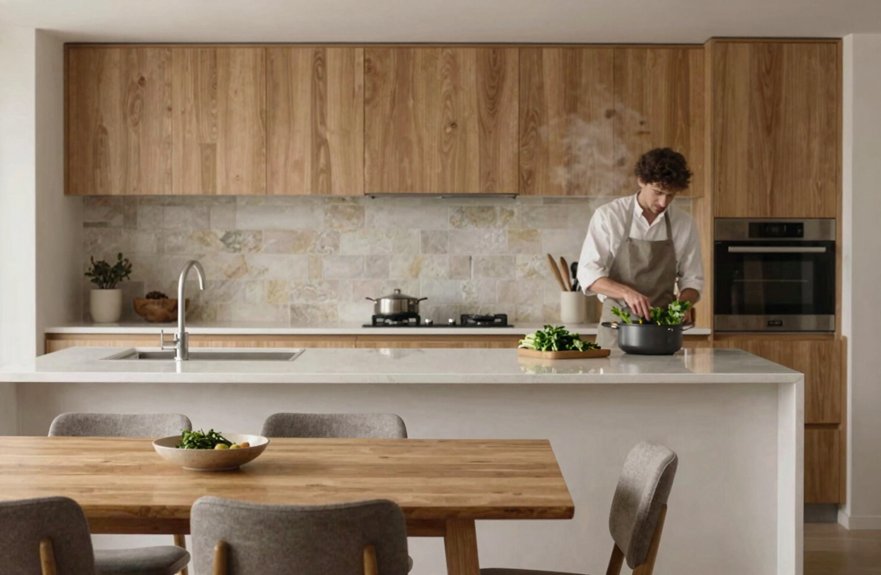
An open kitchen feels truly open when guests can see the action without feeling crowded by it. You create that freedom with Visibility zoning, so each task has a place without hard walls stealing the view.
Glass partitions, clear or textured, help you shape space while keeping sightline clarity and easy interaction.
Protect visual flow by leaving paths wide and simple, because bottleneck prevention matters as much as style.
Keep controlled station views on the most inviting moments, like plating or grill work, and move messier prep and dish handling out of sight.
When you pair this layout with strong ventilation and quiet equipment, you reduce heat, odors, and noise, so the room feels relaxed, not like a kitchen trying to escape.
Make the Island the Centerpiece
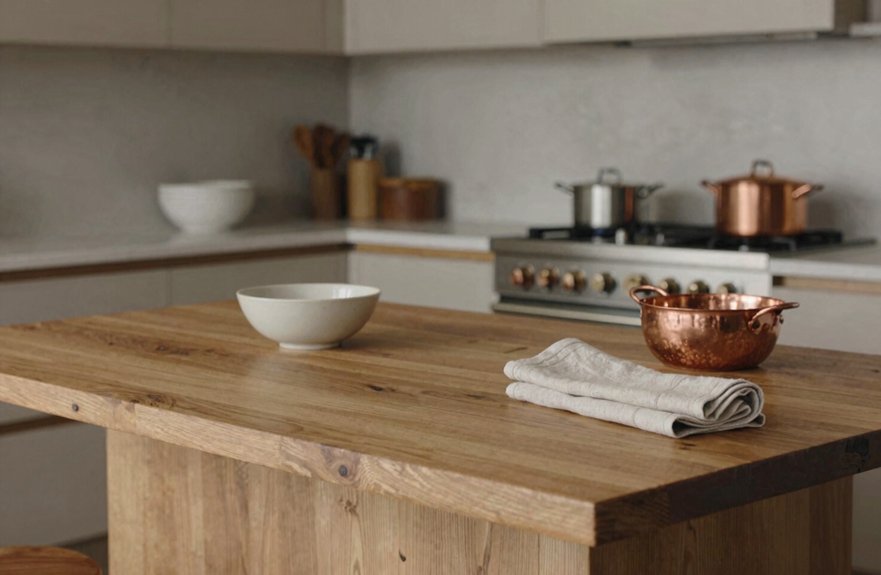
To make an open kitchen feel intentional, give the island the role of center stage, because that’s where the eye naturally lands and where guests are most likely to gather. Choose a white island with black accents around it, and you’ll pull attention toward the cook area without adding clutter.
A bold backsplash can frame the zone and help the island read as the main feature from the dining space. Keep your flow friendly island easy to move around, and plan cookline sightlines so the room feels open, organized, and relaxed.
Add a seating edge on one side, and you create an inevitable gathering zone for morning coffee, casual meals, and easy conversation. That way, your kitchen stays free, flexible, and ready for real life.
Add Island Seating for Guests
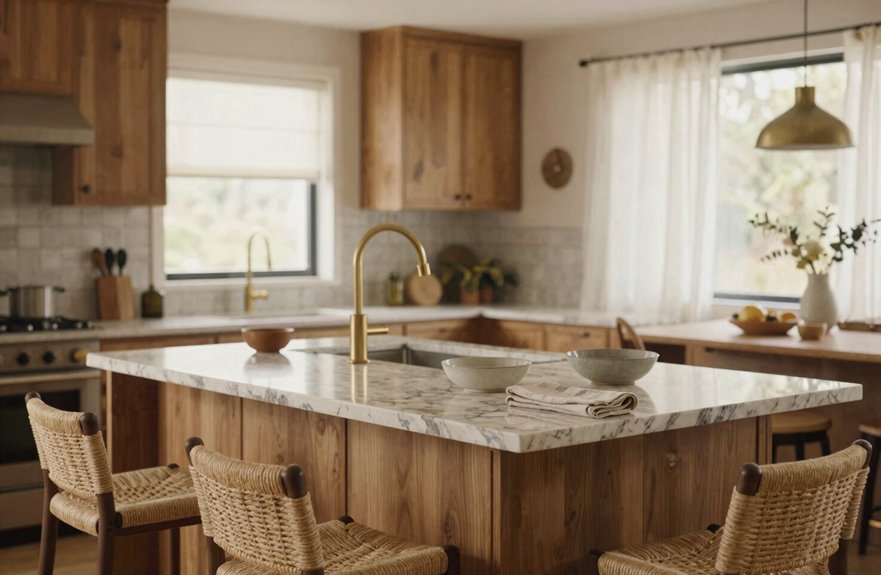
When you want your open kitchen to feel welcoming instead of crowded, give the island a clear job as guest seating by turning one side into a bar-style gathering spot with a row of stools along the outer edge.
You’ll improve seating workflow and keep guest flow easy, so people can chat without drifting into your cooking zone.
Choose four to six stools if the length allows, and use the island for casual dining, morning coffee, and quick bites that fit your free-spirited routine.
Keep the seating side sleek, with no bulky storage crowding the pass area, so the room still feels open.
In an airy layout, your island can become everyone’s favorite place to linger, and yes, it may steal the spotlight without stealing your space.
Use Contrast to Frame the Island
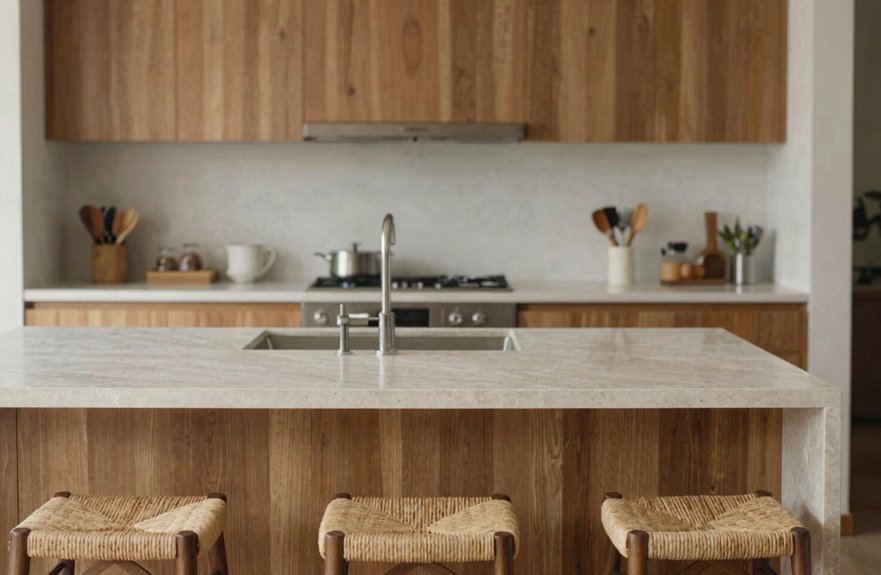
You can make your island the clear focal point by placing a white center island against bold black elements on both sides, so it stands out right away in your open kitchen.
A statement backsplash behind or around the island adds even more contrast, especially when you pair granite or stone with warmer wood or reflective metal details.
Keep that strong contrast focused in one zone, and you’ll get a defined, polished look that feels calm instead of busy.
Bold Island Contrast
Because contrast naturally draws the eye, a white island can become the clear centerpiece of an open kitchen when you frame it with bold black accents on either side.
You keep the space free and open, while the island pulls focus and supports smooth Dining Flow.
Pair stone, granite, or warm wood with the white top, and you create distinct Lighting Zones that feel calm, not crowded.
Repeat the contrast in small ways, like darker side panels or a crisp edge, so the look stays intentional.
- Let barstools mark the gathering boundary.
- Keep finishes bold, but not busy.
- Use contrast to guide guests, not trap them.
This approach gives you a one-of-a-kind island, clean sightlines, and room to move, so your kitchen feels easy, welcoming, and fully yours.
Statement Backsplash Focus
A well-chosen backsplash can do more than protect the wall—it can turn your island into the clear star of the room. You can frame a primarily white island with high-contrast black sides, then let navy, emerald, or deep red tile pull the eye toward the cooking zone.
| Detail | Effect |
|---|---|
| Funky tile | Adds energy |
| Textured stone | Feels grounded |
| Metallic accents | Looks designed |
| Clean finishes | Keeps calm |
This feature layer helps your dining flow, supports traffic zoning, and gives you better sound control in open space. With smart lighting placement, the backsplash glows instead of shouts, and your kitchen feels free, polished, and open.
Pick a Statement Backsplash
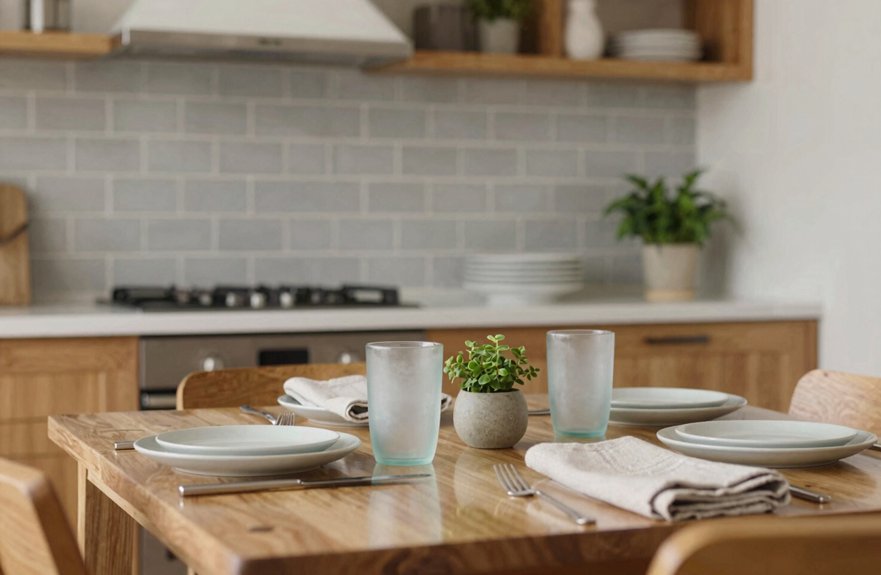
You can make the backsplash the star of your open kitchen by choosing bold tile in a bright pattern or a rich color, like navy, emerald, or deep red, so it draws the eye without crowding the room.
Add texture with stone, reclaimed-wood looks, or a touch of metal to give the area depth and make the space feel thoughtful, even when the rest stays simple.
When you pair that strong backdrop with a clean, organized layout, the kitchen feels calm and polished, and the backsplash carries the show instead of the mess.
Bold Tile Choices
For a kitchen that feels lively but not busy, make the backsplash the star with bold tile choices that act like a built-in design feature. You can keep your space free and open when you use Tile Placement with purpose and protect Color Harmony with a simple plan.
Pair a white island with navy, emerald, or deep red tile, then let the surrounding surfaces stay calm so the wall speaks first.
- Choose funky patterns with metallic accents for instant focus.
- Frame the island area, not the whole kitchen, so attention lands where you cook.
- Keep decor light, because fewer extras stop visual clutter from taking over.
With this approach, your backsplash becomes the featured design element, and your kitchen stays bold, clear, and easy to enjoy.
Texture As Anchor
Texture can be the anchor that gives an open kitchen real presence, especially when you choose a statement backsplash behind the cooking zone. You can use stone, reclaimed wood, or textured tile to add depth and character where eyes naturally land.
This keeps your island or cook area feeling like the scene’s star, without asking you to crowd the rest of the room.
Pair that surface with smooth cabinetry or clean walls, and the contrast helps the space read clearly from the dining room.
Layered lighting can catch those depth accents and make them feel alive.
Textured finishes also hide small marks better than flat glossy ones, so your kitchen stays relaxed and ready for real life, not just perfect photos.
Color That Pops
A strong backsplash can do more than add style; it can give your open kitchen a clear focal point that guests notice right away. Choose one with bold color, like navy, emerald, or deep red, and let it command attention behind the cooking zone. You’ll create energy without adding clutter, which keeps your dining area feeling open and free.
- Use texture, like custom tile, stone, or reclaimed wood, so the color feels rich in real life and photos.
- Match it with Cabinet Harmony by keeping surrounding finishes calm and cohesive.
- Plan for Lighting Balance, since open layouts show every shine, shadow, and edge.
A white island can look even stronger when you frame it with high-contrast color, giving your space a confident, easy flow.
Keep the Layout Flexible
When you plan an open kitchen, flexibility matters just as much as style, because the best layout is the one that fits your home instead of fighting it.
You can protect traffic flow by shaping modular zones around the way you cook, eat, and move.
Use the adjacent wall for prep or adaptable storage, and let removable partitions, or a simple wall change, open sightlines without forcing a full rebuild.
In compact spaces, partial wall removal can connect kitchen and dining areas while keeping your chef workflow steady.
A peninsula with seating for four to six gives you a social spot that feels open, and it won’t block views like a big island might.
Widen doorways, bring in more light, and keep your layout free enough to conform with you.
Avoid Bulky Cabinets
- Use open shelving for daily tools.
- Reduce cabinet height where possible.
- Remove looming barriers that steal counter space.
When you clear out bulky masses, you don’t lose function, you gain freedom to move, cook, and gather without the kitchen feeling boxed in.
Choose Only the Features You’ll Use
Before you open up a kitchen, decide which guest-facing moments you really want to show, because not every idea belongs in the finished space.
You can shape Guest Flow by picking only the features that support it, like plating at the pass or a partial cook view, instead of exposing everything.
Use Visibility Controls to keep prep and dish chaos out of sight, while the Pass Interface stays clean, simple, and easy to read.
That way, you protect your Workflow Rhythm and give your team room to move without feeling on display.
If you want more freedom, consider that openness is adaptable, not all or nothing.
A smaller window can still feel open, and your guests won’t miss the drawer-search drama anyway.
Keep the process disciplined, and the experience stays calm.
Add Personality to an Open Kitchen
Once you’ve chosen the open-kitchen features that truly earn their place, you can give the space a clear personality without adding visual noise. Let one seen feature lead, like a bold backsplash or rich color tile, so your cooking zone feels like art, not clutter.
Build around cohesive materials, such as a white island with dark sides or wood and granite mixes, to keep the room fresh from the dining room.
- Use statement lighting to spotlight your best details.
- Keep guest facing design open with glass, metal, or frosted screens.
- Choose curated surfaces instead of many tiny décor pieces.
With only a few strong moves, you create freedom, style, and a kitchen that feels calm, lively, and truly yours.