

You’ll keep air cleaner and temperatures steadier when you center the hood over the cooktop, keep the canopy about 20–30 inches above the burners, and choose a layout that matches the stove, wall hoods for walls, island hoods for islands. Control drafts from windows, doors, and stairwells, because they can shove smoke sideways and let odors wander. A well-sized ducted hood with balanced make-up air stays quieter, steadier, and far less dramatic than a smoky dinner cloud.
Key Takeaways
- Center the hood over the cooktop with a 20–30 inch mounting height to intercept rising smoke and heat early.
- Use a wider, deeper island hood for open kitchens so it can capture spreading plumes from all sides.
- Keep duct routing short and direct to maintain airflow and reduce grease and odor escape.
- Control drafts from windows, doors, stairwells, and HVAC so they do not push smoke away from the capture zone.
- Balance makeup air with high-CFM ducted hoods to prevent negative pressure, unstable airflow, and poor capture.
Why Open-Concept Kitchens Are Hard to Vent
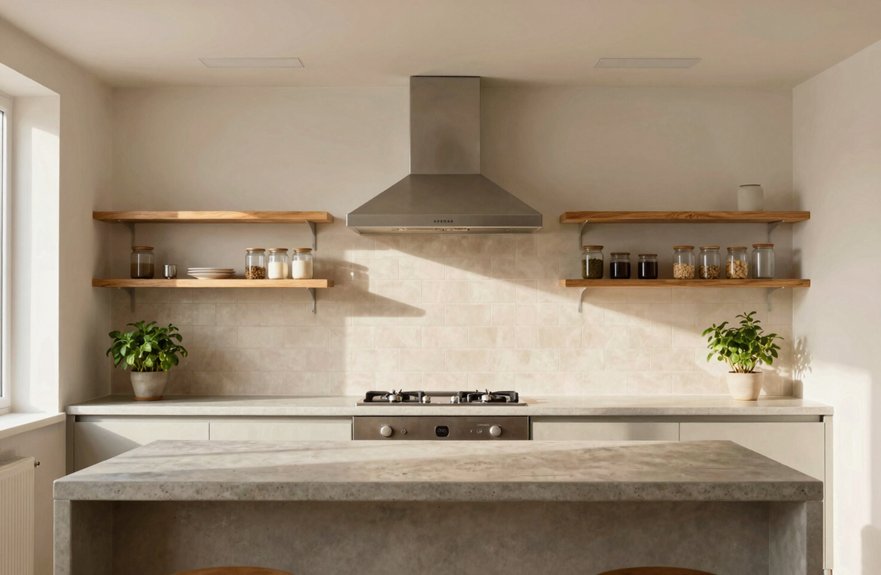
Why are open-concept kitchens so tricky to vent? You’ve removed the walls that once held cooking smoke close, so your hood has to fight a bigger room and more freedom for contaminants to travel.
That creates recirculation challenges, because cross-breezes and HVAC air can push plumes sideways instead of up.
Grease aerosol behavior gets harder to control, too, since tiny particles can drift onto lights, fans, and nearby furniture.
Pressure balancing matters as other fans or systems can steal capture force and make the air feel unsettled.
Warm air can rise into halls and bedrooms, which explains odor persistence long after dinner’s done.
If you’re searing steak and the room turns hazy fast, your layout’s telling you it wants stronger ventilation, not just hope.
How Air Moves in Kitchen Ventilation Layouts
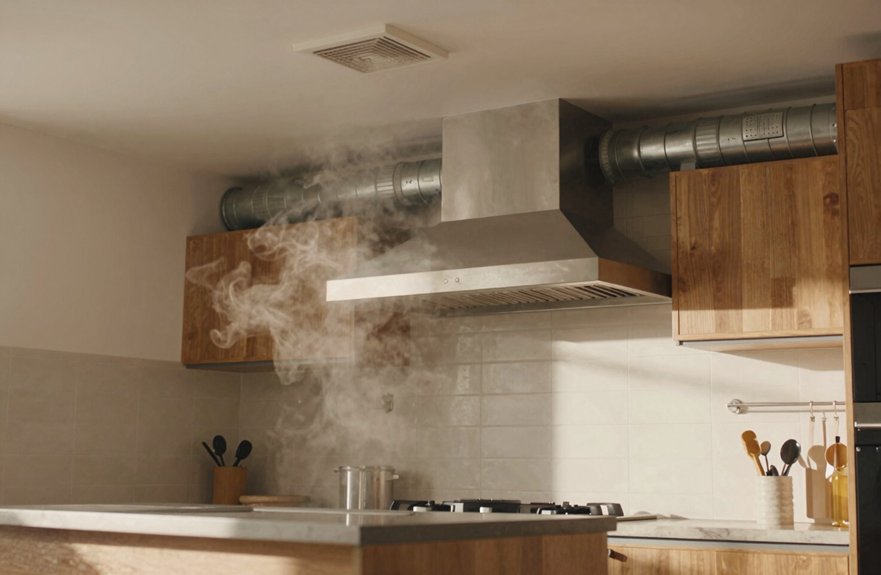
You’ll see that air in your kitchen doesn’t just rise in one neat line, it moves in paths that can spread cooking steam and smoke into the room before your hood catches it.
In a two-story home, warm air can also drift upward through stairwells and hallways, so odors and grease may travel farther than you’d expect.
That’s why a good layout keeps the hood centered over the cooktop and sized to cover the full capture area zone, so the plume has fewer chances to escape.
Airflow Paths And Mixing
When you think about kitchen air movement, it helps to picture the cooking plume as something that doesn’t stay in one neat column for long.
In an open layout, it spreads fast into nearby rooms, so you need hood control, Makeup Air, and a steady Pressure Balance to keep control.
Your HVAC can also move that air, which raises Recirculation Risks and can push Odor Migration into halls, bedrooms, and upstairs spaces.
Windows, patio doors, and fans can bend the plume away from the hood, so the airflow you want may not be the airflow you get.
With smart placement and enough intake air, you keep the system freer, cleaner, and less likely to let cooking smells wander off like they own the place.
Stack Effect And Drafts
Even after you’ve formed the airflow path and reduced mixing, another force can still work against your kitchen hood: the stack effect and stray drafts. Warm smoke temperature makes air rise, so steam and fumes can slip upward into halls or bedrooms if your capture strategy misses them.
You’ll get better results when you respect pressure balance, because bathroom fans, dryers, and return vents can tug air the wrong way.
Open doors, windows, and stairwells can also bend the plume sideways before the hood grabs it.
Keep the canopy centered and about 20–30 in above the cooktop, so rising heat meets it early.
Crossflow testing helps you spot unwanted breezes, and it gives you the freedom to adjust your layout before odors win.
Capture Zone And Spread
A hood works best when its collection zone overlaps the cooking plume, because that rising column of hot air, steam, and grease only stays contained if the canopy catches it early. You want strong hood overlap, not just strong airflow, since thermal buoyancy lifts contaminants fast. In open plans, the plume can wander into living space, and cross-breezes from doors, windows, or vents can push it sideways.
| Layout | Spread | Fix |
|---|---|---|
| Wall | Low | Center hood |
| Island | High | Deeper canopy |
| Open | Wide | Seal drafts |
| Mixed | Fast | Balance airflow |
| Tight | Best | Keep overlap |
If dryers, baths, or HVAC pull harder, your hood loses the tug-of-war. Give it room, and you keep more freedom, cleaner air, and calmer temperatures.
What Makes a Range Hood Capture Smoke Well?
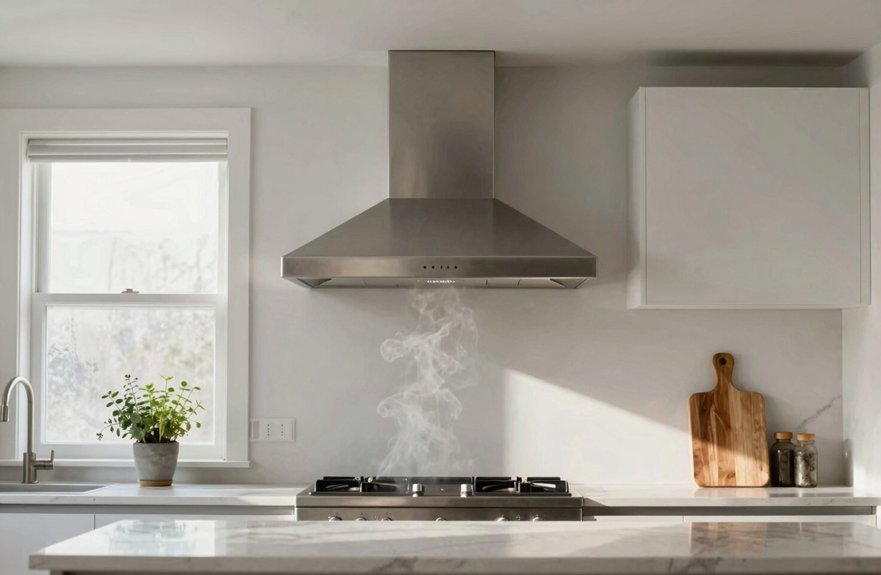
Smoke-capture success starts with smart hood placement, because the hood has to meet the plume where it rises.
You’ll get the best results when the canopy is centered over the cooktop, with Canopy Height and Install Location set near the maker’s usual 24–30 inches.
That keeps smoke from slipping around the edges like a sneaky escape artist.
Focus on capture area, not just CFM: the hood should stretch a bit past the front burners and reach far enough front to back to cover the hottest rising gases.
In open kitchens, keep drafts from windows, doors, stairwells, and vents from steering smoke away.
Deeper baffle or mesh filters help trap more aerosol.
When you sear or fry, use boost speed for cleaner, freer breathing.
Kitchen Ventilation Layouts for Islands and Walls
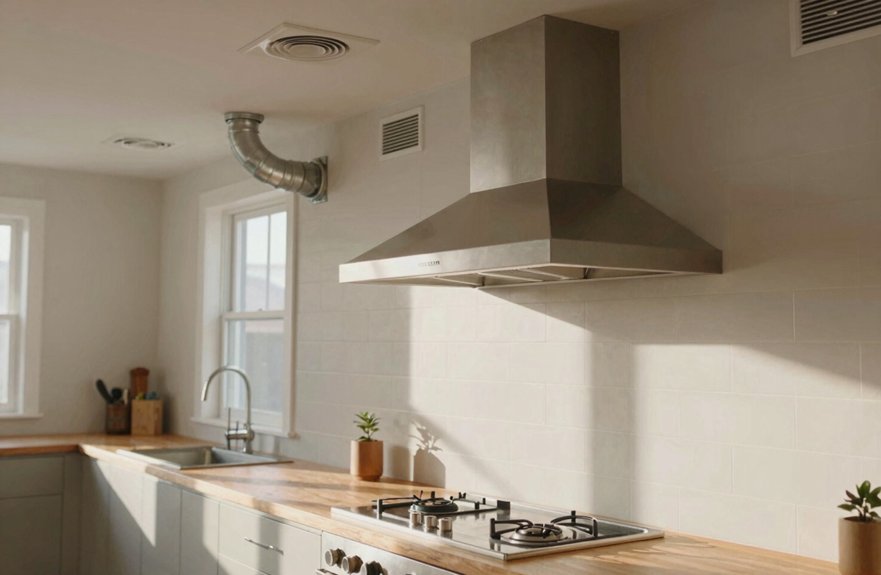
When you plan kitchen ventilation for an island or a wall range, the hood has to match the layout as much as it matches the cooktop size.
With island placement, you don’t get a back wall to help guide the plume, so choose an island-style canopy that’s a bit wider, deeper, and centered over the burners.
That extra reach boosts capture efficiency when cross-breezes or open doors try to push smoke sideways.
For a wall hood, the wall helps shape the rising air, so you can usually get solid results with a smaller increase in size.
Keep duct routing clean and direct, and mount the hood about 20–30 inches above the surface.
This helps reduce temperature gradients and keeps your kitchen feeling free, not fussy.
How to Size Ventilation for Real Cooking
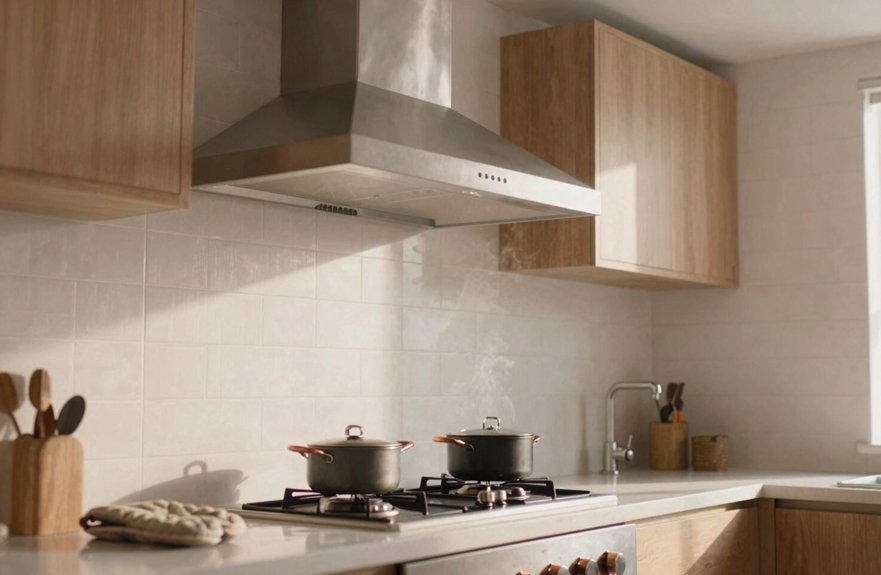
Size your ducted range hood for the way you actually cook, not just for the number on the box. If you sear steaks, stir-fry, or deep fry often, you need more power because those meals throw off more Grease Aerosols and smoke than a simple simmer.
Pick a canopy that’s at least as wide as your range, and deeper front to back so it can catch the front burners too.
Keep the hood at the manufacturer’s height, usually about 20 to 30 inches above the cooktop, so you protect Capture Efficiency without stirring up a windy mess.
In open kitchens or islands, go wider and often stronger, since air can drift sideways.
Size it for real freedom at the stove, not wishful thinking.
Ducted Hoods and Make-Up Air
A ducted range hood sends cooking air outdoors, which means it can pull in grease, steam, smoke, and many combustion byproducts out of your kitchen instead of sending them back through filters.
You get cleaner air and a freer-feeling space, but you also need make-up air sized to match the hood’s CFM.
Without it, the house can feel drafty, and the hood may not catch smoke well.
Use balanced pressure control so air stays steady, and route the make-up air through a dedicated outdoor path.
With smart makeup air zoning, you can temper that air and place it so it doesn’t blast across the cooktop plume.
Keep airflow near the canopy gentle, around 75 ft/min or less, and coordinate the hood with HVAC, ERV, and HRV equipment for smooth performance.
How to Keep Kitchen Ventilation Quiet and Stable
Once your ducted hood and make-up air are working together, the next step is keeping that setup quiet and steady so it feels good to live with every day.
Choose a deeper canopy and a hood that matches, or slightly exceeds, your cooktop width, so you can trap smoke at lower fan speeds instead of blasting away like a jet.
Mount it in the maker’s height range, usually 24 to 30 inches above the cooktop, because too much gap makes the hood work harder and louder.
Keep grease ducting short and straight, with fewer bends, so air moves easily.
Use low speeds for simmering, save boost for searing, and check sones or dB, not just CFM.
That way, your kitchen stays calm and free.