

You build a stronger Japanese restaurant kitchen when you keep prep, cooking, and plating in a tight one-way flow, so each step stays fast and precise. Place the sushi station near cold storage, keep woks and fryers close to prep, and use modular all-electric equipment to shorten travel. Put tools, sauces, and ingredients within arm’s reach, avoid crossing the live lane, and you’ll cut ticket times while keeping the rush calm, with more smart layout tips ahead.
Key Takeaways
- Use a back-to-front, one-way layout linking prep, cooking, and plating to keep movement fast and orderly.
- Place storage, prep, and service in a tight golden triangle to reduce steps and prevent crisscrossing.
- Keep tools, noodles, broth wells, and hot equipment within arm’s reach for faster, more precise assembly.
- Separate high-heat cooking from slicing and prep zones to maintain a calm, clean, and efficient workflow.
- Use modular stations, point-of-use refrigeration, and dedicated cold storage to speed restocking and protect ingredient quality.
What Makes Japanese Kitchen Layouts Different?
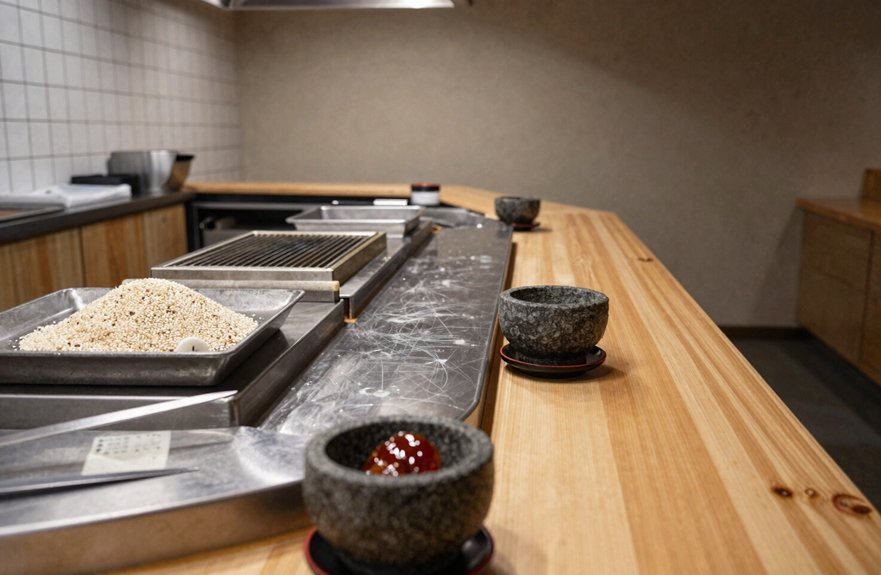
What makes Japanese kitchen layouts different is the way they focus on speed, precision, and smooth movement from one task to the next.
You work in a tight flow, so storage, prep, and service stay close, helping you cover more ground with less wasted motion.
Specialized stations for noodles, broth, and final plating let you switch tasks fast, while modular equipment and induction zones give you freedom to adjust without major rebuilds.
Point-of-use refrigeration keeps delicate ingredients steady, so textures stay crisp and fresh.
All-electric setups also cut heat and help you cook more evenly.
If you’re learning cooking etiquette training, these layouts support calm discipline, while dish presentation rules stay easy to follow.
You feel efficient, not trapped—like the kitchen finally moves with you.
Map the Japanese Kitchen Golden Triangle
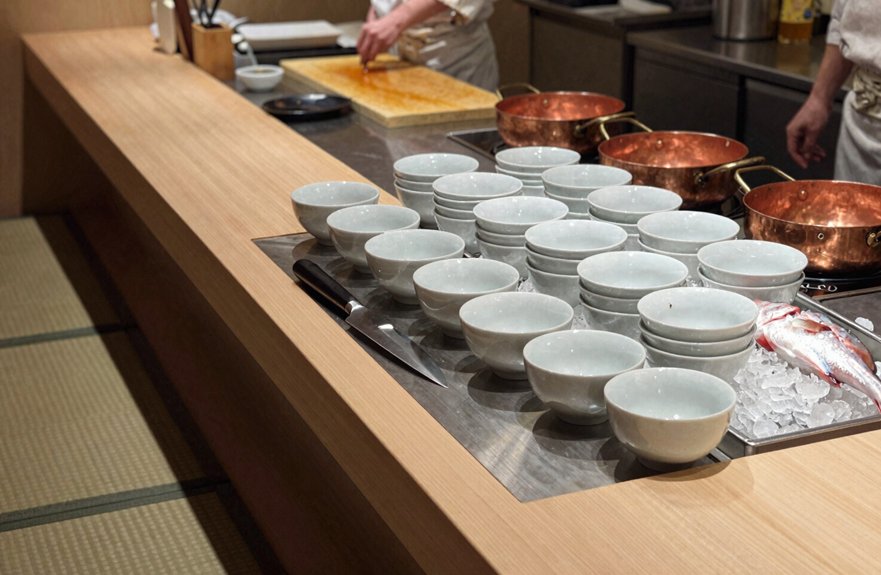
Now that you understand how Japanese kitchen layouts support speed and steady movement, you can map the Golden Triangle, the simple flow that links storage, prep, and service so every step stays close and efficient.
In a small ramen kitchen, you keep ingredients at storage, stage them on a prep surface between the noodle cooker and broth wells, then move to the finishing station near the guest.
This back-to-front path cuts travel and protects speed.
Use staff training to lock in the route, then check workflow timing so each move stays smooth.
A quick bottleneck analysis helps you spot anything blocking ramen assembly, while menu sequencing keeps the busiest items on the cleanest line.
Even in tight space, you can create freedom by placing each step within reach.
Zone Prep, Cooking, and Plating Areas
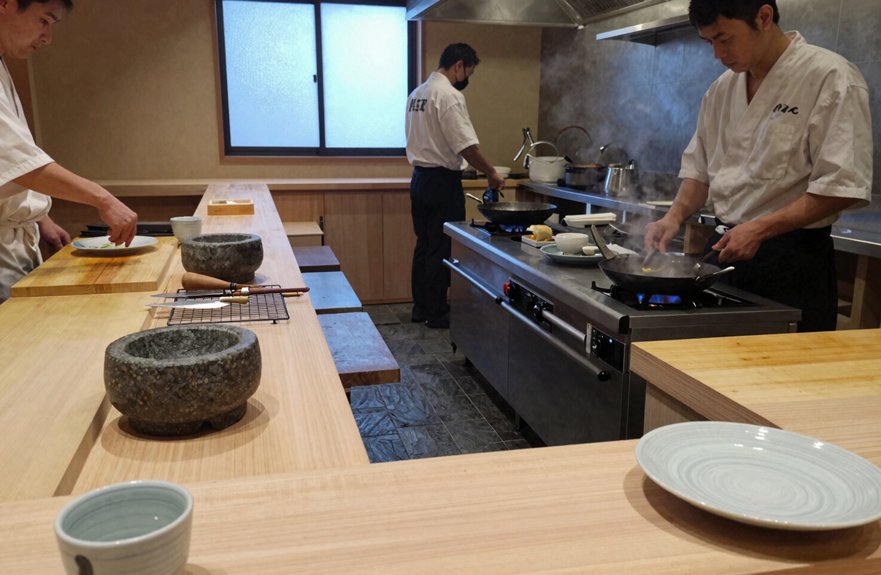
To keep service moving at a steady pace, set up three linked zones—prep, cooking, and plating—so every ramen or sushi component travels in one clear direction, from ingredient handling to heat, then to the final bowl or plate handoff. You’ll feel the difference when ingredient mise sits close to the cook line and your team avoids throughput bottlenecking.
| Zone | Purpose |
|---|---|
| Prep | Build, slice, and sort with Knife skills training |
| Cooking | Keep hot tools within arm’s reach |
| Plating | Finish with service staging and topping control |
In tight spaces, place noodle and stock prep between cooker capacity and broth wells. Add a short barrier to guide safe moves, then keep plating clean and ready, so timing-sensitive textures stay crisp. That setup gives you more flow, less drag, and a kitchen that can breathe.
Place the Sushi Station for Speed
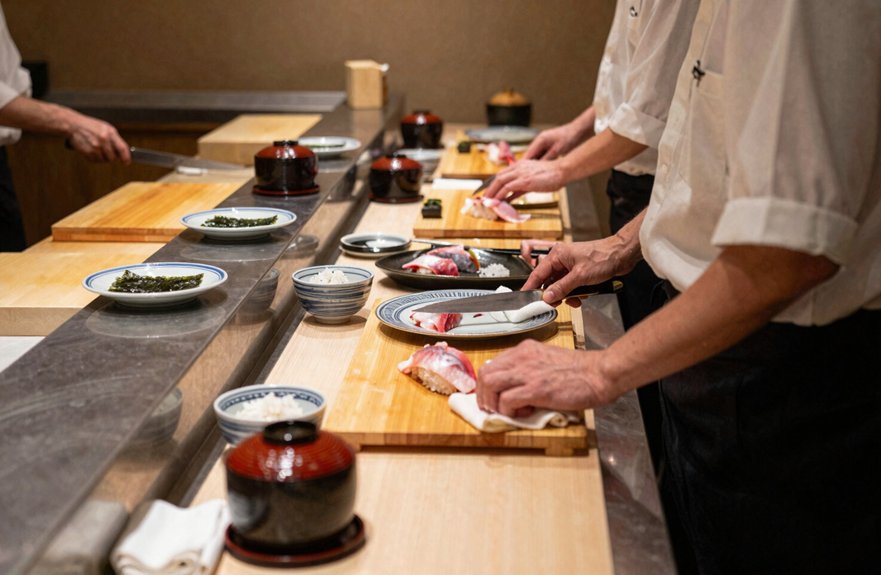
You’ll want to place the sushi station near the center of your kitchen, so your team can reach the prep area and cold storage quickly, without wasting steps during a busy rush.
Keep chilled ingredients within arm’s reach with built-in refrigeration drawers, because that helps protect texture, cuts down search time, and keeps the line moving.
When you arrange the station this way, you make service faster and smoother, and your sushi still looks and tastes carefully made.
Centralize For Faster Service
When speed matters, place the sushi station at the center of your workflow so roll assembly, garnishing, and the final handoff to the dining counter all happen along the shortest path from refrigeration and prep.
You’ll improve ticket timing and reduce staff crossover when each step follows the golden triangle of storage, prep, and service.
Keep your most used items within arm’s reach, so you don’t waste time hunting for nori, sauces, rice, or roe toppings.
A centralized station also helps you keep texture and quality steady during busy rushes, because you move less and work more smoothly.
With the right layout, your team can serve faster, stay freer to focus, and keep every plate clean, consistent, and ready without unnecessary detours.
Keep Cold-Chain Within Reach
Because sushi depends on both speed and temperature control, place the station right next to reliable cold-chain storage, such as a refrigerated drawer built into the counter, so your team can grab ingredients without breaking the workflow.
You’ll keep frozen tobiko, masago, and other delicate items close, which protects texture and cuts down on trips to a remote walk-in freezer.
When you centralize prep, your marination workflow stays smooth, your garnish staging stays tidy, and every move feels lighter and freer.
Store knives, towels, and tools in the same chilled zone, so you spend less time searching and more time plating.
That tight layout helps you move from cold storage to prep to handoff at the bar with confidence, while keeping cold-chain rules intact and your food crisp, clean, and guest-ready.
Position Woks and Fryers Near Prep
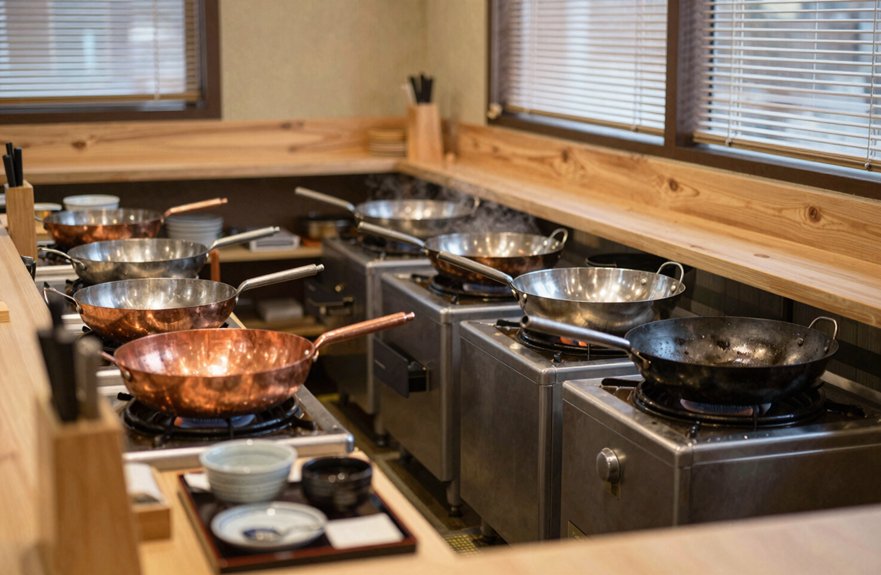
Right next to the prep area is often the best place for woks and fryers, since cooks can move sliced aromatics, proteins, and sauces straight into the heat with very few steps during a busy rush.
You keep Sushi Prep Timing steady when your Counter Placement supports fast handoff from knife work to flame.
Put wok shovels, ladles, spider strainers, splash screens, and key condiments within arm’s reach, so nobody starts tool hunting like they lost a treasure map.
A short, direct path from prep tables to the wok or fryer helps you hold batch timing, protect crispness, and finish food at the right doneness.
At the same time, you separate intense heat from slicing stations, so prep stays calm, clean, and free to move.
Cut Walk Distance Between Stations
You can cut wasted steps by keeping each station close together, so your team moves smoothly from storage to prep to service without crisscrossing the kitchen.
Place tools, refrigeration, and key ingredients right where they’re needed, because every extra reach or walk slows the line and adds stress.
When you optimize the work path, bowls, noodles, and sides flow faster, and the whole kitchen feels more organized, almost like it’s on rails.
Minimize Station Gaps
To keep service moving fast, place your kitchen’s main stations so staff can travel in straight, clear paths with as little backtracking as possible.
Build a modular workflow around storage, prep, and service, then use microbatch staging so each step feeds the next without crowding.
In a ramen or sushi line, set the next station downstream, so bowls glide from noodle cookers to bowl build areas, broth wells, and finishing spots.
Put point-of-use refrigeration at the station that needs it, and cluster hot tools close to prep, so you don’t waste steps.
When you shrink equipment footprints and reorient wells, you free up movement and keep the pace calm, nimble, and yours.
- Less wandering
- More control
- Faster hands
- Cleaner flow
- Bigger freedom
Place Tools Nearby
Near the heart of a Japanese kitchen, the best tools stay within easy reach, because every extra step eats time and breaks rhythm.
You can build a golden triangle around storage, prep, and service, so knives, tongs, ladles, scoops, and Point of use timers sit right where you need them.
Place the prep surface between noodle cookers and broth wells, and bowls glide from one task to the next without wandering across the room.
At each handoff point, keep finishing tools beside you, so your utensil handoff flow, stays smooth and bowls never wait.
Move bulky gear off the live path, and keep controls close to the tools they support.
That way, you work with more freedom, more speed, and less footwork.
Streamline Work Path
When the rush starts, a smart Japanese kitchen keeps the ramen and sushi work path moving in one clear direction, so staff aren’t circling the room or backtracking between stations. You can build that freedom with single direction flow, where assembly moves back-to-front and only one short lateral handoff crosses a pony wall to finish a bowl.
Keep tools, noodles, and broth wells within arm’s reach, especially at the active prep line.
- Feel calmer in the rush
- Move faster with fewer steps
- Stay focused on each plate
- Avoid crossing the live lane
- Breathe easier with staggered staging
Tighten the golden triangle, shift heavy cooking off to the side, and shorten every path while still meeting sink rules.
Use Vertical Storage to Save Space
Vertical storage can make a small Japanese kitchen feel much more open, and it often saves more time than people expect. You can build a vertical label system so every shelf, bin, and tool has a clear home, which helps you move fast without second-guessing.
Use stackable prep stations, corner rail storage, and compact garnish shelving to keep ladles, nori, sauces, and strainers within easy reach.
Place small seasonings, batter cups, and garnish containers on vertical racks, so you can grab them quickly during ramen or sushi rushes.
Add point-of-use refrigeration drawers in counters for cold items like tobiko, and group storage by workflow, from prep to service.
With modular wall-mounted systems, you stay flexible, tidy, and free to adjust when the menu shifts.
Choose Compact Equipment for Small Kitchens
For a small Japanese kitchen, compact equipment can make the whole space feel calmer, faster, and easier to manage. You’ll gain room to move, and your team won’t feel boxed in by bulky machines.
Choose induction units and space-saving noodle combos that fit fast service cycles, and trim oversized gear to what you actually need.
Compact storage design keeps tools close, while point-of-use refrigeration cuts extra trips.
When you use induction spaceplanning, you can open a straight back-to-front flow that feels almost effortless.
- Less crowding, more breathing room
- Faster handoffs, fewer detours
- Smaller gear, bigger freedom
- Clear counters, calmer minds
- A kitchen that keeps pace with you
Design High-Heat Stations for Fast Output
A strong Japanese kitchen needs a dedicated high-heat zone, placed so cooks can move straight from prep to searing with almost no wasted steps. You should build this station around a wok burner, teppanyaki, or induction setup, then keep utensils, sauces, and toppings within arm’s reach so you don’t create a Workflow bottleneck during rush service.
Stack shelves vertically beside the heat line, so you can restock fast without breaking the sizzle.
If you’re running ramen or noodle bowls, place boiling and broth heat sources close to prep, so assembly flows back to front and queue timing stays tight.
With induction, keep ingredients cut to similar thickness and density, so each batch heats evenly and keeps its texture, even when orders fly.
Keep Cold-Chain Storage by the Sushi Counter
You can keep cold-chain storage right by the sushi counter with a dedicated refrigeration drawer, so delicate items like tobiko stay at the right temperature and’re ready when you need them.
When you place ingredients close to the rolling station, you cut down on trips to the walk-in freezer, which helps you avoid unwanted temperature swings during a busy service.
This point-of-use setup also supports steady temperature control, so you protect texture, flavor, and the clean crunch your guests expect.
Point-Of-Use Refrigeration
Because sushi depends on freshness and precision, point-of-use refrigeration belongs right at the counter, not far away in a back room. You gain temperature buffering against warm air, and rapid restocking keeps your rhythm free and smooth.
A dedicated, high-stability drawer lets you hold sushi-grade items close, so you’re not running laps to a walk-in freezer.
- Feel calm when roe stays firm
- Feel fast when orders stack up
- Feel free when your hands stay moving
- Feel confident with tight temperature control
- Feel proud when every roll looks right
Set the drawer at the center of your station, with short handoffs to the cutting surface, and choose hardware that recovers fast. That way, you protect texture, preserve flavor, and keep service flowing.
Sushi Counter Proximity
Keeping sushi ingredients cold works best when the storage sits right where the handoff happens, so the counter itself becomes part of the cold chain.
You save steps, keep your knife handling habits clean and steady, and move from drawer to board without losing rhythm.
When frozen tobiko or masago stays close, you preserve that bright crunch, and your guests feel the difference.
You also protect portioning consistency, because your hands travel less and your timing stays tight.
Design the drawers so you can open them without blocking the build line, and you’ll keep service flowing even when tickets stack up.
With hardware matched to the ingredient’s size and texture, you work with more freedom, less drift, and a sushi station that feels ready for anything.
Stable Temperature Control
When the cold storage sits right inside the sushi counter, it does more than save steps, it helps protect every ingredient’s texture, taste, and safety from the moment it leaves the drawer to the moment it reaches the plate.
You keep chilled fish, tobiko, and masago steady, even when orders pile up and the room gets busy.
That freedom matters because you’re not chasing ingredients across the kitchen.
With Knife Station Zoning and Rice Prep Timing lined up beside the drawers, you can build each bowl in sequence without letting food warm too long.
- You feel calm when the rush starts.
- You hear fewer doors slam.
- You waste less time, and less product.
- You keep that crisp crunch alive.
- You serve with confidence, not panic.
Optimize a Small Noodle Station
To make a small noodle station work hard without feeling cramped, build it around an assembly-line flow that keeps each step close together. Put the noodle cooker first, then place a prep surface right beside it for draining and portioning, so bowls never roam. Use stacked bowls or nested pans with a built-in broth warmer, and keep both within arm’s reach, so you cut extra motion without crowding the line.
Set clear Menu labeling standards and pair them with Staff workflow training, so everyone grabs the right batch fast. Standardize noodle thickness, broth hold temperature, and timer settings, then place toppings and seasonings at the point of use.
You’ll finish bowls right there, keep texture steady, and protect a calm, free-flowing pace.
Lower Ticket Times With Better Flow
You can lower ticket times by setting up a smooth ticket flow, so bowls, sushi, and toppings move from prep to finish without getting stuck.
When you keep your busiest tools and ingredients close to the line, you cut extra steps and help your team work faster during peak rushes.
A clean, direct layout also gives you faster station access, which keeps orders moving and makes service feel calm, even when the kitchen’s busy.
Streamlined Ticket Flow
A fast Japanese restaurant kitchen depends on a ticket flow that feels smooth from start to finish, and that usually starts with smart placement of the main work areas. You can boost menu reorder timing and ticket counter staffing by keeping the prep surface between noodle cookers and broth wells, then letting bowls glide to finishing without extra steps.
- You feel less rush when the path stays clear.
- Your team moves with calm confidence.
- Guests wait less and smile more.
- You keep control when orders spike.
- Freedom grows when every motion has a purpose.
Set the high-touch station near the bar and POS, use the golden triangle, and keep tools within reach. Tight zoning helps you avoid crossings, so side prep won’t slow the live line.
Faster Station Access
When the live line stays open and the main stations sit in the right order, ticket times drop fast because staff don’t waste steps crossing paths or hunting for tools. You can build a golden triangle from storage to prep to service, then place the ramen or sushi finish station beside the point of sale layout for quicker handoffs. That setup supports staff crossflow reduction and keeps the room feeling free, not cramped.
| Move | Result |
|---|---|
| Centralize cold-chain storage | Grab ingredients within arm’s reach |
| Use modular stations | Shift from noodles to broth faster |
| Shrink range footprints | Keep aisles open and clear |
Back-to-front bowl flow, from cookers to broth wells to finishing, cuts delays. Small, flexible equipment lets you move with ease and serve more guests.
Use Modular All-Electric Equipment
In a Japanese restaurant kitchen, modular all-electric equipment can make the whole line run cleaner, cooler, and more smoothly, especially in tight spaces where every inch matters.
You can swap in induction stations, broth wells, and timers without major rewiring, so Menu Cycle Planning feels flexible instead of forced.
With Cross Training Staffing, your team can move between tasks faster, because each module works the same way and keeps temperatures steady.
Standardized noodle thickness and stock density help induction heat land evenly, while programmed boil-and-hold units keep broth and starch ready together.
That means less waiting, less sweat, and more freedom to focus on craft.
- Calmer shifts
- Cleaner air
- Faster flow
- Fewer surprises
- More control
Keep Tools and Ingredients at Arm’s Reach
Once your all-electric line is set up, the next step is making sure every tool and ingredient sits exactly where your team needs it.
Keep your most-used utensils, sauce bottles, and ingredient bins within arm’s reach at sushi prep, ramen assembly, and plating stations, so you’re not hunting for a spoon when ticket timing gets tight.
Place refrigerated drawers beside the sushi counter or noodle station, and use point-of-use storage for delicate items, so they stay cold and ready.
Put woks, griddles, and fryers near spatulas, ladles, towels, and thermometers, which cuts extra steps and helps you avoid workflow bottlenecks.
Leave clear paths between prep, heat, and finishing zones, and your crew can move fast, stay precise, and keep service flowing without feeling chained to the line.
Avoid Common Japanese Kitchen Layout Mistakes
Even the best Japanese kitchen can slow down if the layout works against the flow, so it pays to spot the common mistakes before they turn into daily headaches. Keep your ramen line open, don’t crowd the 385 sq ft path, and let bowls glide from prep to finish without a traffic jam.
Skip extra gear that steals space, because a few well-sized cookers beat a wall of unused metal. Plan noodle timing control and reheating sequence planning early, so soup, noodles, and garnish land in the right order.
Don’t guess on plumbing, sinks, or energy, and keep tools within easy reach. That way, you move freely, serve faster, and breathe easier.
- Fewer bottlenecks
- Less stress
- Faster service
- Cleaner workflow
- More freedom