

High-heat cooking zones give you fast, steady heat for searing, stir-frying, and boiling, while helping you cook more safely and efficiently. You’ll want to keep them spaced from fridges, cabinets, and traffic paths, because heat can raise appliance load and create awkward door-swing moments. Good ventilation, heat shields, and a smart work triangle keep your kitchen cooler, cleaner, and easier to use, and there’s more to learn about getting the layout just right.
Key Takeaways
- High-heat cooking zones deliver fast, steady heat for searing, stir-frying, and boiling.
- Separate hot zones from simmer or holding areas to prevent scorching and overcooking.
- Place ovens and cooktops with proper clearance to reduce heat transfer and improve workflow.
- Use heat shields, insulating mats, or rated barriers near cabinets, walls, and refrigerators.
- Strong ventilation and range hoods remove smoke, steam, and excess heat for safer cooking.
What Are High-Heat Cooking Zones?
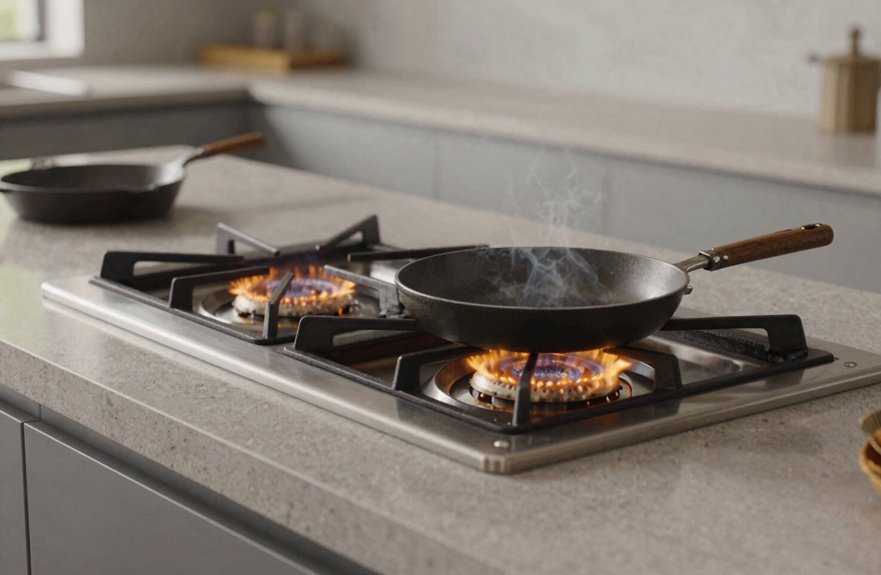
High-heat cooking zones are the parts of a stove or cooktop built to deliver strong heat fast, so you can sear meats, stir-fry vegetables, or boil water quickly without waiting around.
You get a dedicated burner or surface that reaches cooking temperature fast and keeps that energy steady.
In a multi-zone setup, this hot area sits apart from simmer or holding burners, so you can keep one task blazing while another stays gentle.
That separation supports High heat misuse prevention, because you’re less likely to scorch sauces or overcook delicate food.
It also helps with Cross zone contamination prevention, since you can keep raw proteins, oils, and prep tools close to the hot zone, then move finished food away cleanly.
Freedom in the kitchen feels better when your heat works with you, not against you.
Why Kitchen Heat Placement Matters
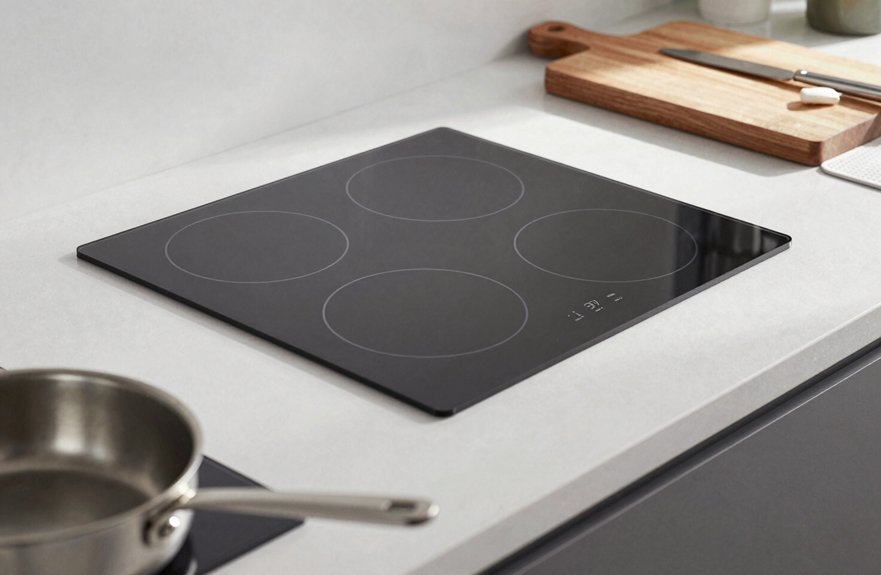
You need to place heat zones with care because your stove, oven, and fridge all create different demands, and poor spacing can make your kitchen work harder than it should.
When you keep hot appliances away from cold ones and leave room for safe movement, you improve workflow, protect cabinets and counters, and avoid those awkward oven-door moments nobody wants.
Good ventilation and smart spacing also help your appliances run more efficiently, which can save energy and keep your kitchen safer over time.
Heat Zones And Workflow
When kitchen heat sits in the right place, the whole room works better, because ovens, stoves, and other hot appliances give off heat through radiation, convection, and conduction, and that warmth can raise the load on nearby cool appliances like refrigerators.
You can guide your flow with meal prep routing, pantry staging, and a simple work triangle that moves you from fridge to sink to stove without backtracking.
Keep oils, proteins, and marinades near the burners, then shift cleanup tools toward the sink so tasks stay clean and quick.
Treat door swing and walking paths as part of your heat map, because tight traffic slows you down.
With smart zone planning, you save energy, stay free to move, and keep the kitchen feeling open and easy.
Appliance Spacing And Safety
Because heat moves farther than many people expect, appliance spacing can make a big difference in both safety and performance.
You’ll want to keep the oven away from the refrigerator, since oven heat forces the fridge to work harder and can wear it down sooner.
Follow manufacturer gaps, and give stronger burners even more room.
- Check Heat shield selection for tiles, mats, or panels that block radiant heat.
- Watch Materials performance so nearby cabinets can handle the load.
- Build in Fire safety planning and clear Emergency access, so doors swing open and you can move freely when the oven’s hot.
With smart spacing, you protect your gear, keep your kitchen calm, and stay ready to cook on your terms.
Ventilation And Energy Efficiency
Good ventilation and smart appliance placement do more than keep your kitchen comfortable; they also help your appliances run the way they should. When you keep ovens away from a refrigerator, you stop extra heat from making the fridge work harder and waste electricity.
Leave a few inches of space, follow model clearances, and use heat shields or sound insulation panels where needed to block radiation and protect cabinets.
A well-sized range hood, used during high-heat cooking, pulls away heat and fumes fast, so nearby machines don’t face extra thermal cycling.
If you want even better efficiency, choose induction, since it sends heat straight to your cookware and cuts waste.
With steady energy monitoring, you can spot problems early and keep your kitchen free, cool, and ready.
Keep Ovens and Fridges Apart
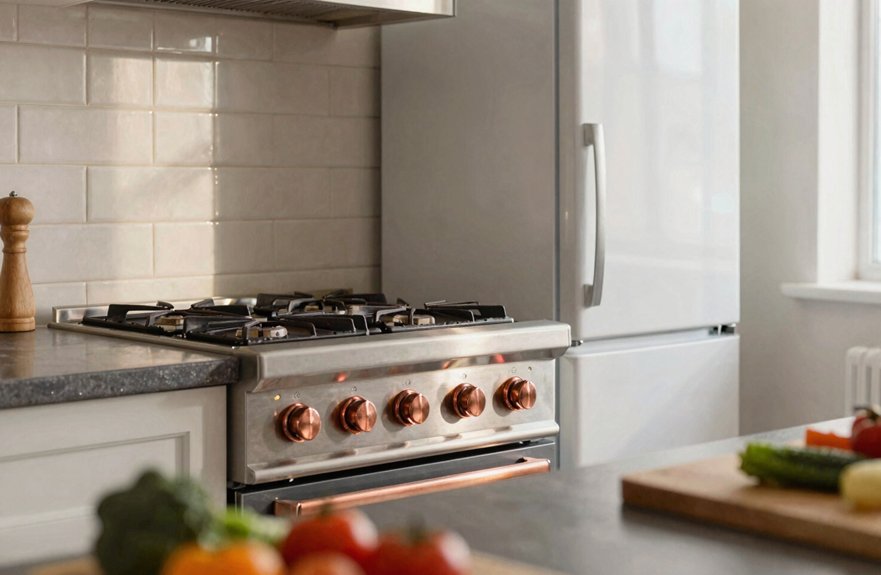
You’ll want to keep your oven and fridge apart, because an oven gives off a lot of heat that can make your refrigerator work harder and wear out faster.
Give them a few inches of space at minimum, then add more room if your oven runs especially hot, so both appliances can do their jobs without a tug-of-war over temperature.
If space is tight, boost airflow and consider a heat-resistant barrier, because a little buffer now can save you from sticky handles, cramped doors, and bigger problems later.
Heat Transfer Risks
When an oven runs next to a refrigerator, it gives off a lot of heat through radiation and hot-air convection, and that extra warmth can make the fridge work much harder to keep food at a safe temperature. You feel the difference in higher energy use, extra wear, and a tighter kitchen. Heat can move by conduction too, so nearby cabinets and panels may turn into unwanted paths.
- Use insulation barriers or thermal shielding to block heat flow.
- Watch for hot door surfaces that add thermal stress.
- Give both appliances room to breathe when close placement can’t be avoided.
If you’re building a freer, smarter kitchen, treat heat as a real neighbor, not a rumor. A few smart materials and good airflow can protect your gear, your food, and your peace of mind.
Safe Appliance Spacing
Keeping an oven and refrigerator too close together can quietly raise your energy bill and make both appliances work harder than they should. Give them a few inches of breathing room, and follow the maker’s placement guide, especially if your oven runs hot or your cabinets hold heat.
That space helps reduce clutter, improve accessibility, enhance storage, and minimize crossings while you move through the kitchen with ease.
If side-by-side placement is your only option, add a heat-resistant panel or approved heat shield to cut heat transfer.
Also, check the oven door swing and clearance before you lock in the layout, because cramped access can turn a simple reach into a risky dance.
A little space now buys you safer cooking freedom later.
Ventilation And Barriers
Because ovens give off a lot of heat through the air and their outer surfaces, they can make a nearby refrigerator work much harder than it should, which wastes energy and can shorten its life.
In your Cooking zones planning, keep a few inches of space, or more if the oven runs hot, so each appliance can breathe. Use ventilation behind and around the fridge, and let oven heat escape instead of trapping it in cabinets.
- Add a heat shield or barrier panel between them.
- Choose heat-resistant tiles or insulating mats near the oven.
- Keep heat safe cookware storage away from the fridge zone.
These steps help you protect your setup, save energy, and enjoy a kitchen that feels free, cool, and easy to use every day.
Use the Work Triangle Wisely
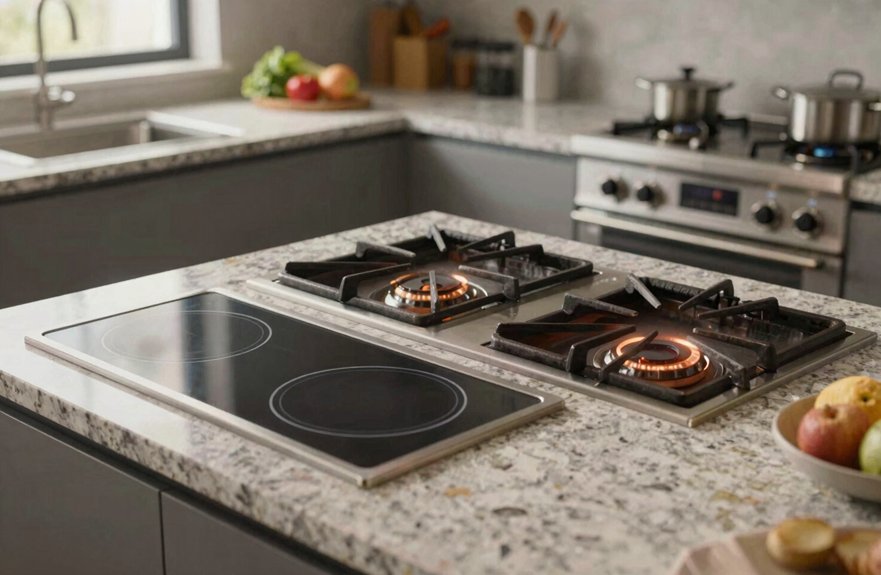
Map out your high-heat zone so the stove, sink, and refrigerator work together as a smooth triangle, with short, direct paths that make cooking, cleaning, and grabbing ingredients feel easy.
You’ll move with more freedom when you keep the fridge close enough for quick reach, but not pressed against the stove.
Leave a few inches between major appliances, and use heat shielding, heat sensor placement, airflow assessment, and zone temperature mapping to guide the layout.
That way, you can grab food, cook fast, then send dirty pans straight to the sink without backtracking.
Check door swings, too, so they won’t block your path when you’re carrying hot cookware.
A smart triangle keeps your kitchen open, safe, and ready for action.
How Heat Impacts Nearby Appliances
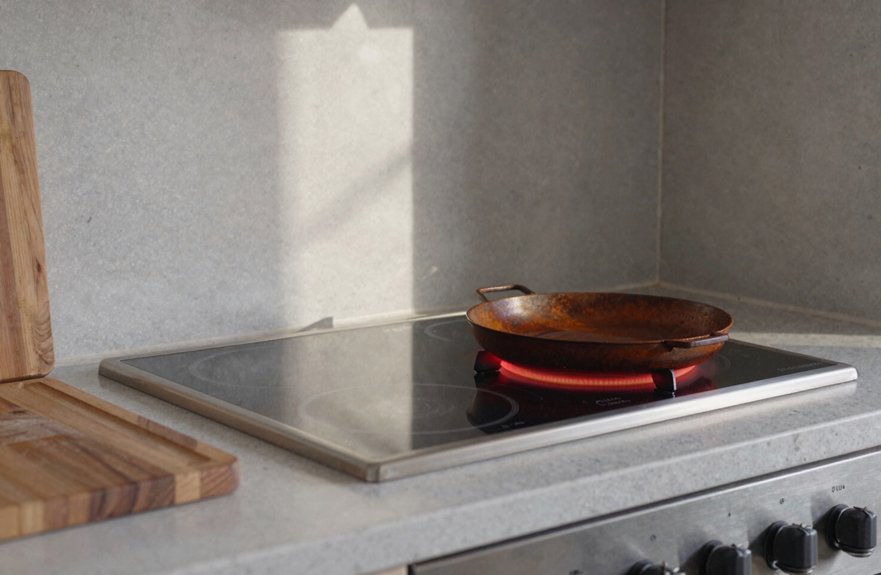
When an oven or range is running hot, it sends heat outward through radiation, conduction, and convection, so any appliance parked too close has to work harder to stay at its normal temperature.
That extra load can raise fridge energy draw, because your refrigerator must fight heat leakage with its insulation and compressor cycle.
You can protect your setup with:
- heat shield materials that block radiant warmth
- a slim barrier panel between the oven and fridge
- heat-resistant tiles or mats near the hot zone
When you give your appliances room to breathe, you keep them efficient and help them last longer.
A cooler fridge runs smoother, saves electricity, and leaves you more freedom to cook without worrying that your kitchen setup is quietly burning extra energy.
How Much Clearance Do You Need?
Now that you know hot appliances can raise the strain on nearby units, the next question is simple: how much space should you leave?
Aim for at least a few inches, usually 3 to 6 inches, between a high-heat oven or cooktop and cabinets or other appliances, then check the maker’s spec before you lock anything in.
If you place an oven beside a refrigerator, give them extra room, because radiant heat can make the fridge work harder than it should.
Use Cabinet Heat Shielding or Appliance Baffle Usage when your layout feels tight, since a heat-resistant barrier can create a safer buffer.
Also, count door-swing space, so handles and doors open freely without awkward pinches.
That small margin keeps your kitchen open, efficient, and easier to enjoy.
Why Ventilation Reduces Heat Buildup
When you cook with high heat, good airflow pulls away hot, steam-filled air before it can linger and warm up the whole space.
Vents also push out smoke and grease particles fast, which helps keep nearby counters, cabinets, and the hood from trapping extra heat.
With steady ventilation, you’ll keep the kitchen safer and more comfortable, and your cooking zone won’t feel like it’s putting on a tiny summer of its own.
Airflow Limits Heat Buildup
Good ventilation keeps heat from hanging around your cooktop for too long, because a range hood or exhaust fan pulls out hot, smoke-filled air and brings in cooler air to take its place. You get a freer, calmer cooking zone when airflow moves fast enough to clear rising heat before it spreads.
In heat barrier planning, you can use proper hood placement and countertop clearance rules to keep nearby surfaces from soaking up excess warmth.
- Strong CFM helps sweep away the hot plume quickly.
- Better airflow cuts steam, so pans stay more steady.
- Good ducting keeps heat from lingering and piling up.
When ventilation falls short, your kitchen can feel hotter, and nearby appliances may work harder than they should.
Vents Improve Cooking Safety
Because cooking throws off hot air, steam, and grease, a well-placed vent helps your kitchen stay safer and cooler by pulling that mix away from the cooktop before it can build up around cabinets, counters, and appliance housings.
You keep more control when airflow control moves heat out fast, instead of letting convection trap it in the hood cavity.
Smart hood placement captures fumes at the source, so grease buildup stays low and fire safety improves.
When the hood matches your range and ducting, it clears the hot plume before it spreads, which also cuts smoke and lowers stress on nearby materials.
That means you can cook hard, breathe easier, and enjoy a freer, cleaner kitchen without fighting a wall of heat.
Best Materials for Heat Protection
For the best heat protection, you’ll want to build the area around your oven with materials that can take repeated high temperatures without breaking down or passing that heat to nearby finishes. Choose heat-resistant porcelain, 12–20mm thick, for the oven zone, and pair it with fireproof surface finishes where splashes and radiant heat hit hardest.
Use thermal barrier options like insulating plasterboard or mats behind the housing, so you cut conduction and keep your setup freer and safer.
- Heat-resistant tiles hold up where standard wallboard can’t.
- Insulating layers help nearby cabinetry stay cool.
- Rated assemblies work as one system, not a guess.
When you match these materials, you create a tough, reliable cooking area that protects your space and gives you more confidence every time you cook hot.
Add Heat Shields Where Needed
Once you’ve chosen strong heat-safe materials around the oven, the next step is to add heat shields where the hottest spots still need extra help. Place shields on the oven sides to deflect radiation, and add a rated barrier between the oven and fridge. That move helps the fridge work less, so you can keep your setup freer and more efficient. Use insulating mats or boards around the housing, then choose heat-resistant tile or plasterboard for busy buffer zones.
| Shield | Best Use | Benefit |
|---|---|---|
| Side panel | Cabinets | Deflects heat |
| Barrier board | Fridge gap | Cuts load |
| Insulation mat | Housing | Limits transfer |
Follow spacing and maker guidance, so you don’t trap heat. Also, improve gasket seals, minimize heat leaks, make sure proper venting, and reduce condensation risks.
How Appliance Doors Affect Workflow
When you plan an oven and fridge layout, the doors matter just as much as the appliances themselves, since their swing, handle position, and clearance can shape how smoothly you move through a busy cooking zone. You keep freedom in your kitchen when you avoid work triangle bottlenecks and give yourself room to flow from prep to cook to clean.
- Check oven door clearance so you won’t sidestep a hot door.
- Place the fridge where its handle won’t block your shortest path.
- Leave space for dishes, ingredients, and your feet to move without a shuffle.
If the fridge sits too close, you’ll twist, reach, and slow down, and that’s when spills happen. With smart door swing planning, you move confidently, stay safer, and keep your kitchen open, easy, and ready for action.
New Appliances That Handle Heat Better
Newer appliances can handle heat better because they use improved cooling systems and smarter insulation, so your fridge or oven won’t have to work as hard when it’s near a hot cooking zone.
You’ll also notice heat-tolerant designs, like stronger barriers and tougher materials, that help protect cabinets and nearby surfaces from extra warmth.
That means you can cook with more confidence, and your kitchen can stay safer and more efficient without feeling like it’s under a constant heat wave.
Improved Cooling Systems
Thanks to better insulation and more efficient cooling parts, today’s refrigerators can hold steady temperatures even when your kitchen is running hot nearby. You get a steadier food zone, less strain on the compressor, and more freedom to build a heat safe workflow around your cooking space.
With smart airflow and thermal-control parts, these models handle extra warmth better than older units, which often lose efficiency fast. That means your oven placement planning can focus on convenience without sacrificing performance.
- Keep hot appliances from crowding the fridge
- Leave space for airflow around each unit
- Check that vents stay clear and open
Even so, you should still follow spacing and ventilation guidance, because a little breathing room helps your fridge stay reliable, safe, and ready for busy meals.
Heat-Tolerant Appliance Design
As kitchen technology keeps improving, many new appliances are built to handle heat more gracefully, which can make your cooking area safer and easier to manage.
You’ll notice modern refrigerators with better insulation and stronger cooling systems, so they stay steady when you place them near warm equipment, as long as you respect airflow clearance planning.
New ovens often use advanced insulation and heat-dissipation design to shield cabinets and countertops.
Induction and convection units also move heat more efficiently, so they waste less energy and leave less lingering warmth.
Still, you should check each model’s thermal insulation limits, because older units can react badly near heat sources.
Follow the manufacturer’s clearances, and you’ll keep performance high, temperatures stable, and your kitchen ready for more freedom.
Why Older Appliances Need More Space
Older appliances need a little more breathing room because they don’t manage heat as well as newer models, and that extra space helps them stay safe and work efficiently.
- You’ll protect nearby cabinets from stray oven heat.
- You’ll give your fridge better thermostat stability, so it won’t fight rising temperatures.
- You’ll make Seal gap planning easier, especially when doors swing wide and handles need room.
Older insulation lets more warmth escape, so tight layouts can push surfaces harder and make your compressor work overtime.
When you leave the space the manual asks for, you support airflow, reduce wear, and keep your kitchen running with more freedom and less stress.
That little buffer isn’t wasted room; it’s smart space that helps your gear breathe, perform, and last longer.
Build a Safer High-Heat Layout
You can build a safer high-heat layout by keeping your searing or boiling zone *distinctly* separated from the fridge and other cool appliances, so heat doesn’t force them to work harder. Leave the recommended spacing around ovens and stovetops, and add heat shields or barriers when hot surfaces sit near cabinets or cooling systems.
Then shape the workspace for easy movement and safe access, with open paths, door swing room, and controls like auto shut-off or child locks that help you stay in charge.
Safe Heat Separation
To build a safer high-heat layout, start by separating the oven from the refrigerator so heat from the oven’s outside surfaces and exhaust doesn’t make the fridge work harder to stay cold.
You’ll protect comfort, save energy, and keep your setup flowing with Work triangle planning and Appliance clearance safety in mind.
- Follow the manufacturer’s spacing guide, then widen it if your cooktop runs hotter.
- Add a heat-resistant panel or partition to block radiation from reaching nearby surfaces.
- Use insulation boards, heat-resistant tiles, or mats around the oven housing to cut heat transfer.
You should also leave room for the door to swing freely and keep hot surfaces out of walkways, because cramped corners can pinch access.
That simple shift gives you more freedom and less stress.
Clear Appliance Spacing
Around the stove and refrigerator, clear spacing makes a big difference in both safety and performance. Keep a few inches between heat and cold appliances, and give even more room when your stove runs hot or your fridge’s sides don’t breathe well.
That simple gap cuts heat transfer, so your refrigerator won’t have to fight the heat all day. Check the maker’s placement guide, too, because each unit has its own needs.
Leave space for door swings and handles, so hot oven doors don’t block your path or pin you in place. If your budget friendly layout is tight, use heat safe material choices like shield panels, insulated mats, or heat-resistant tiles to buffer the edge.
With smart spacing, you build freedom, comfort, and efficiency.
Smart Zone Workflow
A well-spaced kitchen sets the stage, and the next step is giving your high-heat area a smart workflow that keeps cooking fast, calm, and safe. You’ll move easier when each burner has a job: one for searing, one for simmering, and one for holding finished food.
Keep your mise en place close, so oils, tongs, salt, and aromatics stay within reach, not across a flame. That simple setup protects your freedom to cook with less stress and fewer stops.
- Set a holding spot for pans, plates, and mitts.
- Clear unused cookware after each step to keep traffic flow smooth.
- Keep only needed items near the heat, so you avoid clutter and burns.
Store Cookware Near the Cooking Zone
Keep your most-used cookware close to the cooking zone so every high-heat task feels smoother and safer. Put pots, pans, oven mitts, and utensils in the drawers or cabinets right beside the range, so you can reach them without breaking your flow. That saves steps, keeps burners attended, and lets you move from sear to simmer with ease. | Item | Best spot | Why it helps |
| — | — | — |
|---|---|---|
| Cast iron | Lowest nearby shelf | Quick lift, less strain |
| Daily pans | Next drawer | Fast access |
| Mitts | Upper side drawer | Safer handling |
| Lids | Adjacent cabinet | Easy staging |
| Specialty pans | Farther storage | Keeps space clear |
Keep Door clearance and airflow paths open, and use smart Tool placement, spill safety. Cluster heavy cookware closest to the heat, then let your setup work like freedom should: simple, fast, and under your control.
Set Up a Cleaning Zone That Works
Right beside the cooking zone, set up a cleaning area that helps dirty dishes move naturally toward the sink and dishwasher, so you’re not carrying mess back across your prep space. Keep soap, scrubbers, and a deep sink at point of use, then place the dishwasher close by for a fast utensil reset. Use moisture-resistant counters, wipe them down easily, and choose spill proof routines that protect cabinets and plumbing from daily splashes.
Add separate bins for scraps, recycling, and trash, so storage organization stays simple and food storage stays cleaner.
- Rinse and load right away
- Sort waste as you clean
- Keep tools within arm’s reach
Blend Prep and Cooking Space
Once your cleaning zone is working smoothly, you can make the cooking area feel just as natural by blending prep and heat in one easy flow.
Place your cutting board, knives, bowls, oils, and marinades beside the burner, so you can move food straight to the pan without extra wandering.
With smart Prep tool organization, you keep only what you need close by, and that keeps your rhythm free and easy.
Use Counter staging systems to hold finished food for a quick handoff, then clear the space fast.
An under-counter induction setup helps because any open counter becomes prep space when the heat is off.
Keep paths open, too, so you avoid awkward reaches, surprise bumps, and the tiny kitchen drama nobody invited.
When a High-Heat Zone Fits Your Home
A high-heat zone fits your home best when you cook with strong, fast methods often, like searing steaks, stir-frying vegetables, or boiling water in a hurry, because those burners can stay ready for quick, steady results.
- Family meal planning stays easier when you match burner output to busy nights.
- Induction cooktop benefits can add safety, with auto shut-off and child-lock controls.
- An under-counter layout keeps your counter free, and modular burners give you the freedom to cook more than one dish at once.
If you’ve got limited space or a busy household, this setup can feel like a smart upgrade, not a burden. You’ll keep heat where it belongs, reduce obstacles, and avoid wasting energy on tasks that don’t need it. That means more control, less hassle, and a kitchen that works for you.
Common Oven-and-Fridge Mistakes
When you place an oven directly beside a refrigerator, you can create a tough heat conflict that makes the fridge work harder than it should, especially during long baking sessions or other high-heat cooking.
You also risk blocking safe door clearances and breaking your handle access workflow, which can make quick, safe movement harder when you’re cooking fast.
Older fridges feel this mistake even more, since weaker insulation lets heat push their systems harder and waste energy.
Don’t skip heat shield materials or a barrier panel, because they help cut extra heat transfer.
Also, keep ventilation requirements planning in mind, since cramped gaps trap warmth and can overheat cabinets.
Give each appliance the space it needs, and you’ll protect performance, comfort, and freedom in the kitchen.
Design a Kitchen That Works Every Day
Build your kitchen around how you actually cook each day, and it’ll feel easier, safer, and less tiring to use.
Place prep near the fridge and sink, set the high-heat zone in the center, and keep cleanup close to water, so your moves flow naturally.
Add heat resilient storage for pans, oils, spatulas, and mitts, and keep them within arm’s reach.
Leave space between burners and the fridge, or use shields when needed, because freedom feels better when your appliances last.
Choose induction readiness if you want fast heat with a cool surface, auto shutoff, and child lock.
Keep a simple safety checklist nearby, then build daily workflow habits that match your pace, not someone else’s kitchen fantasy.