
You can make a small restaurant kitchen run fast by setting the space ratio early, keeping about 30–40% for the kitchen, and building a one-way flow from prep to cook to plate. Use compact, flexible equipment, keep storage close, and leave clear 3-foot walkways so staff don’t bump elbows. Put cleaning and waste behind the line, match the layout to your menu, and your next few choices will show you even more ways to save space.
Key Takeaways
- Plan the kitchen footprint first: target about 30–40% for kitchen space and keep the rest for dining.
- Design a one-way workflow from prep to cook to plate, with cleaning, washing, and receiving behind the line.
- Keep storage, sinks, and prep stations close together to reduce zigzagging and wasted steps.
- Choose a layout that matches the menu, such as galley for narrow spaces or an assembly line for repeatable dishes.
- Maintain clear 3-foot walkways and use compact, flexible equipment to prevent traffic jams and rework.
Start With the Right Small Kitchen Ratio
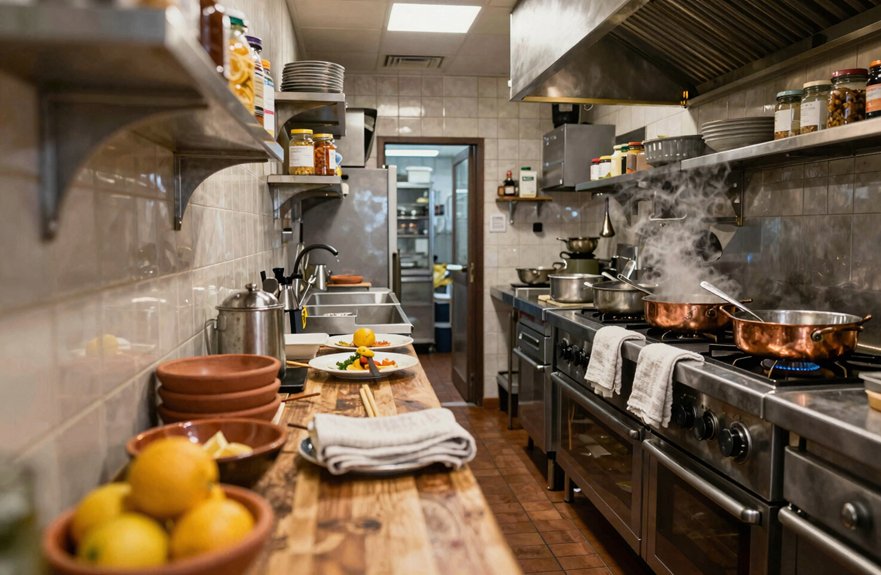
A smart small kitchen starts with the right balance, and that usually means planning for about 30–40% of your total space for the kitchen and 60–70% for dining.
You give yourself freedom when you size the kitchen to match your menu, your staff, and your pace.
Start by setting the total footprint early, then let the ratio guide your layout, so a 200-square-foot ghost setup leaves about 60–80 square feet for workflow.
If your menu stays simple, batch cooking gets easier and you can stay near 30%.
If you need more steps or special gear, move closer to 40%.
Keep staffing planning realistic, and use ticket pacing to protect flow.
In a 2,100-square-foot room, don’t let kitchen space crowd out guest revenue.
What Slows Small Kitchens Down?
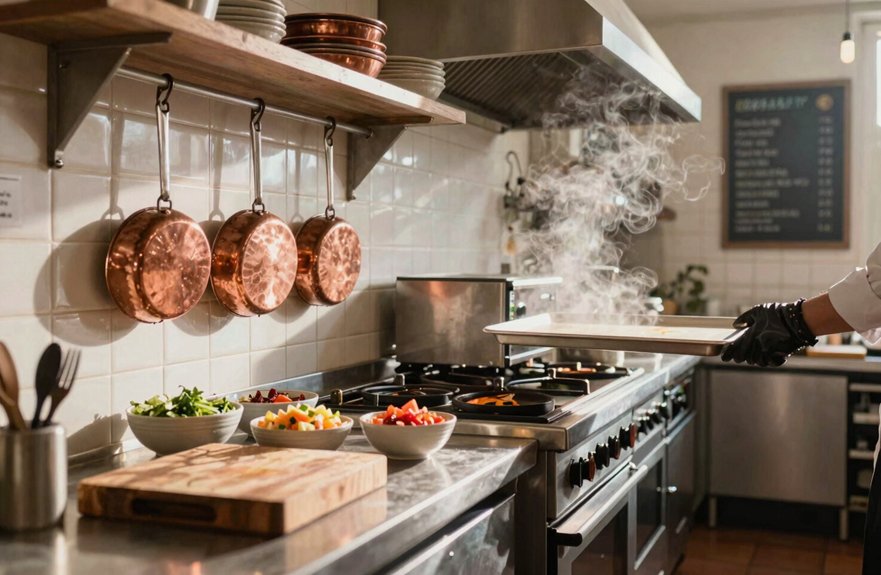
Even the smartest small kitchen can slow down fast when the layout fights the work, because every extra step, pause, or sidestep adds up during service.
You lose speed when staff keep dodging each other, when bulky equipment eats space, or when storage sits too far from the line.
- Keep busy paths near 3 feet wide
- Use flexible core tools, not one-trick machines
- Cut extra steps between storage, prep, and cooking
- Keep cleaning and receiving out of the service lane
- Give plating and pickup enough room to breathe
Bad zone mixing also causes rework, health inspection delays, and staff training gaps.
When chemicals sit above food or utensils, you invite trouble and slowdowns.
You want a kitchen that moves with you, not against you, so your team can stay free, focused, and fast.
Plan Prep, Cook, and Clean Zones
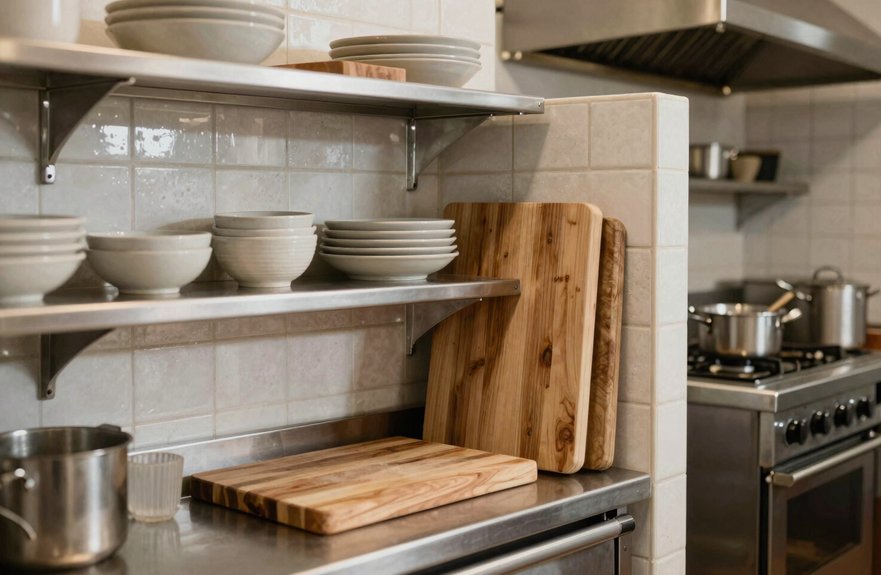
When you plan prep, cook, and clean zones as one smooth path, your small kitchen can move faster without feeling cramped.
Build an assembly-line flow, so prep leads to cooking, then plating and service, while washing and receiving stay behind the line.
Put the sink and food storage near the entry, and keep service handoff near the exit, so hot plates don’t double back through prep.
Set early prep tasks, like chopping and seasoning, close to storage, and separate meat prep from other work.
Shape the cleaning zone with dishwashing racks near the service entrance and storage room.
Use fold-down prep tables and shared worktables to switch spaces fast.
With smart Ventilation planning and clear staff workflow controls, you keep paths open and freedom intact.
Choose the Best Layout for Your Menu
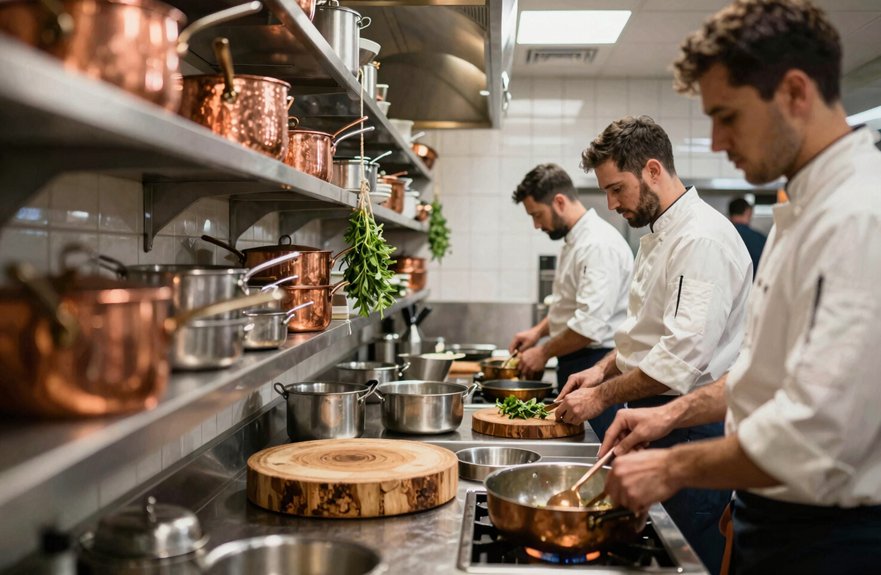
Your menu should lead your layout, because the right setup helps you move faster, waste less steps, and keep service smooth. If you serve a few core dishes, an assembly line can work well, while menus with many dish types may need zones, and in tiny spaces, a galley layout often keeps things from feeling like a kitchen traffic jam.
Keep your stations close to the dishes they support, and choose flexible equipment when you can, so one smart layout can do more without slowing you down.
Menu-Driven Layout Choice
How do you choose a kitchen layout that truly fits a small restaurant menu? Start with the menu, then shape the room around it, so you keep freedom and avoid equipment bottlenecking. If you serve a few repeatable dishes, an assembly line works well, and keeping dishwashing and storage behind the line helps flow.
- Use zoning for mixed menus.
- Choose galley layouts for narrow spaces.
- Pick island setups only for show.
- Center on flexible tools.
- Support cross training staffing.
When your menu needs grill, fryer, and cold prep, separate them into zones. In a tight ghost kitchen, a galley layout can save space, while a showy island setup asks for more coordination. Trim out one-off items that demand special gear, and let versatile equipment carry more of the load.
Match Stations To Dishes
A smart small-kitchen layout starts with the dishes you actually sell, because the right stations should follow the order of each plate, not fight it.
Pick an assembly line for repetitive menus, or zoning when your dishes branch out, so every move feels natural and free.
Build prep first, then final cooking, then cleaning and storage behind the line, which cuts cross-traffic and keeps service moving.
Watch for Menu Constraint problems, like one dish that needs a single machine; use Appliance Substitution with combi, griddle, or convection units instead.
Group grilling with sauté, and fry with broil, to create Station Overlap where it helps.
In tight kitchens, especially galley setups, Workflow Repetition should guide your plan, not your guesswork.
Flexible Layout Tradeoffs
The best small-kitchen layout isn’t the fanciest one; it’s the one that fits your menu and your service rhythm without making every shift feel like a traffic jam.
You get the most freedom when you choose with intent, not ego.
- Use assembly lines for high-volume, simple menus, with storage and the 3-comp sink behind the line for Cross traffic avoidance.
- Pick zoning when you need separate hot and cold work, but watch ventilation constraints and plumbing.
- Choose a galley for tiny footprints, where every inch matters, even if the lane gets tight.
- Try an island only when visibility matters more than speed.
- Build your menu around flexible gear to stop equipment footprint creep and respect station height rules.
Build a Better Assembly Line Flow
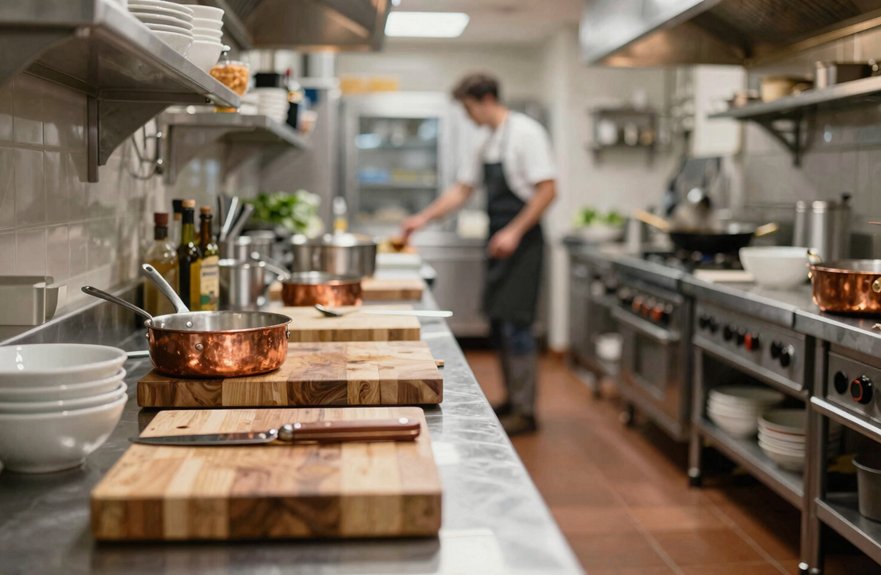
You can keep service moving fast by setting up your line in one clear direction, from prep to cooking to plating, so every task flows forward without crews crossing paths during the rush.
Put washing, waste, and receiving behind the line, near the entry side, and keep sinks and storage easy to reach so staff can refill and clear space without slowing anyone down.
In a tight kitchen, a shared worktable and flexible equipment can help you prep, plate, and finish dishes in the same small footprint, which is a pretty smart way to make every inch work harder.
Streamlined Prep to Plate
When every inch counts, a smart kitchen layout can keep service moving without making your team feel like they’re running a relay race with hot pans. Build a true prep to plate line, and you’ll move tickets in one clean direction, so nobody has to reset after every step.
Keep prep close to receiving and storage, then route dirty sinks and dishwashing behind the line.
Group the hot gear together, use fold-down tables or mobile carts, and leave about three feet where people cross paths. That space keeps you free, fast, and safe.
- chop, portion, season
- bake, fry, sauté
- plate, pack, send
- batch downtime
- watch workflow timers
Tight Space Task Flow
In a tight kitchen, a smart assembly-line flow can keep service calm and steady, even when tickets start piling up.
You should move in one direction, from prep to cook to plate, package, or service, so no one wastes time backtracking.
Put sinks and receiving behind the cook line, and keep refrigerated and dry storage close to prep, so your team can grab what they need without zigzagging.
Use shared stations that switch from prep to plating during rushes, and keep heat equipment grouped so movement stays smooth.
Leave about three feet in busy walkways, and avoid dead ends near the line.
With workflow checklists for consistency and staff cross training to handle bottlenecks, you’ll stay flexible, fast, and free.
When Does a Zoning Layout Work Best?
A zoning layout works best when your menu naturally splits into clear equipment clusters, like cold prep, hot grill and sauté, and bake or fry stations, because each zone can carry the right hood, electricity, and sink setup without sending staff crisscrossing the kitchen all night.
You’ll get the most from it when Menu Complexity is steady, not chaotic, and Staffing Versatility lets a small team cover specialized spots with confidence.
It also shines when you place sinks and storage near entry, service near exit, and keep walkways open so people can move freely.
- Clear station roles
- Lower-to-medium volume
- Team members who cross-train
- Enough room for 3-foot paths
- Fewer menu switches
If your kitchen needs constant juggling, this setup can feel less flexible.
Why Galley Layouts Work in Small Kitchens
A galley layout helps you make the most of a narrow kitchen because it places your cooking and prep stations in straight runs along parallel walls, so every inch has a job to do.
You can move from one end to the other in a clear line, which keeps your team moving fast and makes it easier to handle orders without extra back-and-forth.
It also keeps clutter down by grouping hot equipment and prep surfaces together, so you avoid crowded paths and keep service running smoothly.
Space-Saving Linear Workflow
When space is tight, a galley layout can make a small kitchen feel surprisingly efficient because it lines up prep, cooking, and plating along one or two parallel runs, keeping travel distance short and repeatable. You get smoother task sequencing, less wandering, and more freedom to focus on service instead of dodging elbows.
- Keep one direction movement through the line.
- Build station adjacency so tools stay close.
- Use hot cold separation to cut congestion.
- Put sinks and storage at the end or behind the line.
- Choose compact equipment to protect throughput.
You can keep clear paths, even in a narrow room, and still move fast without feeling boxed in. With the right flow, your team works like a clean relay, not a traffic jam.
Faster Movement, Less Clutter
Efficiency starts with restraint, and galley kitchens prove it by keeping every move simple and direct. You line prep, cook, and plate stations along two walls, so you dodge cross-traffic and keep your team flowing with freedom.
| Feature | Effect | Benefit |
|---|---|---|
| Parallel walls | Straight workflow | Faster service |
| Tight placement | Less clutter | Easier reach |
| Clear walkways | Fewer bottlenecks | Safer rush hours |
Put sinks and storage near one end, cooking gear on the other, and keep only key tools at each station. That cuts extra steps and keeps counters calm. Add focused work area lighting so you can see fast, and use noise control strategies to protect focus when orders pile up. With compact equipment and about 3 feet of open passage, you keep movement clean, controlled, and ready for busy nights.
Make Island Layouts Work in Tight Spaces
Tuck the island into a tight kitchen by making it do more than one job, because a smart island can speed service instead of blocking it.
Put ranges, a griddle, or a combi oven in the island core, and move prep, sinks, and dish work to the perimeter.
You’ll keep traffic flowing and your team free to move.
- Add compact storage under the top.
- Use efficient ticketing at the island edge.
- Set up micro portioning for faster plating.
- Keep rapid seasoning tools close.
- Let fold-down edges and carts expand, then shrink, the workspace.
Group hot tasks together, keep clean tasks at the sides, and give 1–2 cooks clear lanes.
If your room curves, shape the island to fit, so your kitchen stays open, flexible, and ready for the rush.
Keep Open Kitchens Clean and Uncluttered
A smart kitchen layout doesn’t just save steps; it also helps your open kitchen stay calm, clean, and pleasant to look at. You can keep guests focused on the cookline by tucking prep, storage, and dishwashing out of sight, while keeping a clear 3-foot walkway for staff.
Use menu batching and prep timing so fewer tools and ingredients sit out at once, and keep oil disposal near washdown so dirty items don’t travel through view.
With cross training and station rotation, your team can shift smoothly without crowding the pass.
Choose vertical racks, undercounter refrigeration, and fold-down tables to clear counters, and store chemicals in closed cabinets, never above food or dishes.
That way, your kitchen feels free, tidy, and ready for action.
Choose Compact, High-Output Equipment
When space is tight, the right equipment can do the work of three pieces without making your kitchen feel crowded. Use Standardized Equipment and Workflow Mapping to pick compact, high-output tools that fit your menu and your freedom to move.
In a small ghost kitchen, a mindful fryer or mini combi oven can push more food through the same footprint, so you’re not waiting on hardware.
- Choose flexible sauté ranges and griddles.
- Use half-size convection or combi ovens.
- Look for compact fryers with strong output.
- Mount prep gear over refrigerated bases.
- Favor countertop units that bake, hold, steam, and finish.
This setup keeps your line lean, saves heat, and helps you serve fast without buying a machine for every dish.
Build Modular Workstations
You can build stackable workstations that let you handle prep, light plating, and staging in one spot, then shift things fast when the rush hits.
Add fold-away surfaces and mobile carts, so you can open up extra room only when you need it, without crowding your team.
With modular tables, wall racks, and undercounter storage, you’ll keep tools close, protect a clear workflow lane, and make every inch work harder for you.
Stackable Stations
Because every square foot counts in a small kitchen, stackable stations let you build modular work areas that flex with the pace of service instead of locking you into one rigid setup. You can shape workflow scheduling around the room you actually have, not the room you wish you had, and that freedom supports waste reduction, compact inventory, and cleaner training checklists.
Use shared worktables that shift from prep to plating, then roll them back to the perimeter when the rush eases.
- Nest prep tables to save space
- Stack carts between rushes
- Keep only active tools on deck
- Move stations to stop bottlenecks
- Cover prep, plating, or light service fast
In a 200-square-foot ghost kitchen, that flexibility helps four people stay in sync, and nobody’s waiting for a reset.
Fold-Away Surfaces
Stackable stations keep a small kitchen flexible, and fold-away surfaces take that same idea one step ahead by giving you extra workspace only when you need it.
You can mount retractable prep boards beside the prep-to-cook path, so you trim cross-traffic and keep your staff workflow calm.
During menu planning, think of these surfaces as temporary helpers: they expand for prep, then double as plating spots when orders pile up, cutting time to plate without adding fixed gear.
Pair them with wall shelves or racks, and your tools slide back into place as soon as the board folds down.
Keep wash access close, near the 3-compartment sink or nearest station, and your prep checklists stay clean, safe, and ready for the next rush.
Use Vertical and Under-Counter Storage
When every inch counts, vertical and under-counter storage can make a small kitchen feel much bigger without getting in the way of service. You can mount wire racks and shelves above safe clearances, then keep ingredients, pans, and labeled containers within easy reach.
This setup helps you reduce wasted motion, label every shelf, streamline ingredient staging, and improve tray organization.
- Put daily items at hand height.
- Move bulk stock to higher shelves.
- Use under-counter drawers for foil and gloves.
- Choose slim refrigerated bases to free prep space.
- Keep cleaners in a lower, separate cabinet.
Reduce Cross-Traffic in Tight Kitchens
To keep a small kitchen moving smoothly, set up the space so staff don’t keep crossing the same path during rushes.
Place washing, cleaning, and waste handling behind the main cook line, so your crew can stay on task instead of dodging each other.
Build a one-way menu prep flow, with sink and storage near the entry and service near the exit, and you’ll cut bottlenecks fast.
Keep raw-meat prep close to storage and away from other prep zones, so nobody makes extra trips across the room.
Make sure walkways stay at least 3 feet wide, and skip dead ends.
Smart trash chute placement and a clean oil disposal route help you protect speed, safety, and the freedom to move without constant interference.
Improve Small Kitchen Prep Surfaces
How do you squeeze more work out of a tiny prep area without making the kitchen feel cramped? You build surfaces that flex with your flow, and you keep every tool close enough to grab without a shuffle.
- Use fold-down prep ledges for rushes.
- Choose under-counter appliances to save floor space.
- Pick multipurpose tables for chop, seal, and portion tasks.
- Add wall shelves, then organize spice stations by reach.
- Mark zones so raw prep and finishing stay separate.
Use prep checklists so nothing gets missed, and plan compact menu batching to cut repeated motions.
When you set up for speed plating consistency, you’ll move faster without losing control.
Keep your best tools at shoulder-to-waist height, and let the layout work for your freedom, not against it.
Keep Cleaning Stations Close to Service
If you tuck your cleaning station close to the service entrance and the storage room, dirty pans, utensils, and bus tubs travel the shortest possible route, and your team won’t waste time weaving through a tight cook line.
You can place the 3-compartment sink, dish racks, and waste handling right between kitchen and dining, so servers return items fast and cooks stay in motion.
Keep clear paths open for both chefs and waiters, because you want to reduce cross traffic and prevent workflow gaps that slow a busy shift.
Put hot oil disposal in the same zone, so you don’t send it down narrow aisles like a bad idea on wheels.
Leave slip-resistant walkways and enough clearance for safe, free movement.
Meet Ventilation and Fire Code
Build your ventilation plan around the equipment first, then fit the room around it. You need a Type I/II hood sized to your cook line, plus compliant ducting and suppression that keep smoke moving out, not back into your free space.
Protect aisle width, appliance clearance, and access routes near exits and hand sinks, and keep compact storage away from hot equipment.
- Place the fire extinguisher where you can grab it fast.
- Coordinate plumbing coordination, water supply, and drainage layout before final install.
- Set electrical placement to avoid lighting heat and blocked service paths.
- Use workflow checklists to confirm shutdowns and airflow.
- Plan service scheduling for hood cleaning and inspection hatches.
With smart planning, you keep the room open, safe, and ready to move.
Design Safe Oil Disposal Routes
Where should used cooking oil go when every inch of your kitchen already matters? Route it to a dedicated, code-compliant collection point in the wash area, near the 3-compartment sink, but away from handwashing and food prep.
Use lidded, heat-tolerant containers with spill containment, and keep the path short and straight from fryer to dump point.
Don’t send hot oil past cleaning supplies, the staff breakroom, or any ignition source.
That keeps odor control tighter, protects equipment uptime, and supports smart maintenance scheduling.
Make sure the route never blocks fire access, egress, or hood coverage.
In a compact kitchen, a clear oil path lets you move freely, work safely, and avoid the kind of mess that turns service into a slippery comedy nobody asked for.
Use Tech to Improve Small Kitchen Flow
You can keep your kitchen moving by using smart inventory tracking, which helps you order only what you need and frees up space that would otherwise go to extra shelves.
Forecasting maintenance tools can watch your equipment for heat or electricity problems, so you catch trouble early instead of letting a surprise breakdown slow everyone down.
Computerized order routing then sends tickets straight to the right station and shows live status updates, helping your team stay in step without extra walking or guesswork.
Smart Inventory Tracking
Track every box, bag, and bottle with smart inventory software, and a small kitchen can move a lot faster without feeling crowded.
You’ll know what’s on hand by SKU and recipe yield, so you can reorder before stock-outs and skip overbuying.
That means better Waste Reduction, Storage Optimization, and fewer Workflow Bottlenecks.
Use *software-driven* ordering to cut search time, keep Staffing Scheduling smoother, and support quick Inventory Audits.
Centralize deliveries and unit sizes, then rotate perishables by date for Spoilage Prevention.
Dashboards help you spot slow movers, improve Prep Efficiency, and tighten Portion Control.
- Track real counts
- Reorder at the right time
- Reduce waste
- Free up prep space
- Keep service moving
Predictive Equipment Maintenance
Smart inventory and smart maintenance work best together, because a small kitchen can’t afford surprise breakdowns that clog a tight line or stall service. You can use smart sensors to watch energy use, heat, and door cycles, then spot fryer lag, oven probe drift, or weak airflow before they wreck your flow. Forecasting alerts let you plan repairs during slow windows, so staff scheduling bottlenecks don’t trap you in chaos.
| Signal | Action |
|---|---|
| Rising temp swings | Check probe sensors |
| Slow recovery rates | Service burners or ovens |
| Parts wear forecast | Reorder filters, gaskets |
With workflow bottleneck analysis, you’ll know which machines need attention first, and your team can keep moving with fewer surprises, less waste, and more freedom.
Automated Order Routing
When every square foot matters, computerized order routing can keep a small kitchen moving without the usual pileups and hand-offs. You can send each ticket straight to prep, grill, fryer, or expo, so your team stays in its lane and your line feels free, not crowded.
Use station rules for shared gear, like griddles or combi ovens, to group hot work and cut extra touches. Real-time screens showing Accepted, Cooking, and Ready help you release plates fast, reducing idle time.
- Route orders with cloud POS links
- Use contactless ticketing systems
- Trigger inventory alerts before items run out
- Add mobile or QR ordering
- Keep menu flow clean and steady
With better routing, you spend less time fixing chaos and more time serving guests.
Scale Without Losing Speed
As your restaurant grows, the goal isn’t just to make more food, it’s to keep service moving at the same pace, or even faster, as orders pile up. You can do that by batch cook planning, time boxing prep, and cross utilization of tools, then checking throughput measurement so your line stays sharp.
Build an assembly-line flow, prep to cook to plate, and keep sinks and storage behind the line so people don’t cross paths and slow you down.
Choose flexible gear like combi ovens and griddles, not lots of single-use gadgets.
In a tiny ghost kitchen, use modular stations, shared worktables, and 3-foot walkways, with mobile POS and QR ordering, so your team stays free, focused, and fast.